

Ready to shop purpose-built garage flooring?
US Army rated #1 • Solid PVC tiles • Heavy-duty mats • Professional epoxy • Ships nationwide
Which Flooring Products Are Actually Suitable for Your Garage?
Not all flooring is built for the punishment a garage dishes out. Here's what works, what doesn't, and why the wrong choice will cost you far more in the long run.
Interlocking Tiles • Roll-Out Mats • Epoxy CoatingsWhat Actually Qualifies as Proper Flooring For Your Garage?
Interlocking garage tiles and roll-out mat flooring (commonly called garage mats) are the two main types of garage flooring. When most people hear "garage mats" they immediately think of the little mats you wipe your feet on. In this case, they are full rolls of PVC flooring that cover your entire floor.
A high-quality epoxy coating system is another excellent garage flooring option that can deliver great, long-lasting results. We have a detailed discussion on which product is best for your situation on our Garage Epoxy vs. Garage Tiles vs. Garage Mats page — it covers budget, appearance, and the durability demands of different traffic types.
What Happens Without Protection For Your Garage Floor
Whether it's regular paint, epoxy, tiles, or mats — you need something on your floor. Without protection, road salts, salt air, tire abrasion, and vehicle fluids attack your concrete on a continuous basis. The image below shows what an unprotected garage floor eventually looks like.
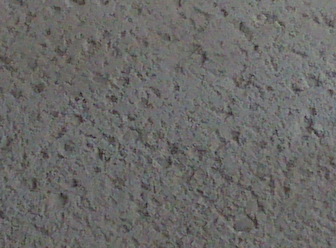
Unprotected concrete: pitting, salt damage, and surface degradation from everyday garage use.
This damage is permanent and progressive. Road salts, hot twisting tires, and vehicle fluids eat through unprotected concrete year after year. By the time it looks this bad, surface-level repairs won't fix it — you're looking at grinding, resurfacing, or complete slab replacement.
Flooring That Should Never Be Used in a Garage
Don't make the mistake of thinking standard flooring products will work in a garage environment. Porcelain tile, ceramic tile, VCT tiles, and outdoor carpeting were neither designed nor intended for garage use. Here's why each one fails:
- ✗ Porcelain / Ceramic Tile: Extremely slippery when wet. Mortar and grout destroyed by road salts and hot tires & difficult install
- ✗ VCT Tile: Slippery when wet. Requires nasty black mastic adhesive. Chips and cracks easily. Difficult to replace
- ✗ Outdoor Carpet: Nightmare to keep clean. Stains easily. Tires wear through even the best grades quickly
- ✗ Vinyl Mats: Bunch up under vehicle weight. Very slippery. Not the same as heavy-duty polyvinyl mats
- ✓ Interlocking PVC Tiles: Hammer-proof. No adhesive needed. Snap-together install in hours
- ✓ Roll-Out Polyvinyl Mats: Heavy-duty. Won't bunch, curl, or wear through under vehicle weight
- ✓ Epoxy Coating Systems: Permanent bond to concrete. Chemical and abrasion resistant. Showroom finish
- ✓ All 3 Options: Minimal floor prep, fast install, built specifically for vehicle traffic and garage conditions
These products require far more surface prep and labor than real garage flooring — and they'll fail anyway. You'll end up spending even more to tear them out and install a proper garage floor. Save yourself the heartache and money by choosing the right product from the start.
Shop purpose-built garage floor tiles and mats
Solid PVC • US Army rated #1 • Won't shift, split, or click-clack • Lifetime guarantee
What to Look for in A Quality Floor Product
Garage flooring has very specific performance demands. In the case of rubber or mat flooring, the product must be heavy enough and robust enough to handle twisting and turning tires without bunching or curling — even with the full dead weight of your vehicle sitting on it. If your flooring isn't made specifically for this, it will crumble, bunch up, and your tires will very quickly wear through it.
Even a lot of so-called garage mat floors are not really up to the challenge. Do your research and make sure you purchase the best-made garage mats available. The same goes for garage tiles — a solid PVC floor tile is so tough and durable you can take a hammer to it and not damage it. Try that with porcelain tiles or recycled hollow-core tiles and see what happens.
One hint at knowing a good-quality product: Look at the weight of the tiles, inferior tiles weigh less than a pound! Also look at the length of the warranty offered. Generally, the longer the warranty, the higher the quality — unless that warranty has a lot of small print. In that case, run, don't walk away from those products.
Not Just for Garages
If you think a little outside the box, you'll find that garage floor tiles and mats are better suited for your application than any other type of flooring — not only in durability and appearance, but in ease and quickness of installation. The majority of garage flooring products can be installed in as little as a few hours, minimizing time, labor, and in the case of a business, minimizing downtime.
Garage roll-out mats can be used for a wide variety of floor applications. We've sold them for workshops, dog kennels, jetways, and even the Kangaroo Conservation Center. Take it from us — kangaroos are not easy on a floor! They're constantly hopping all over the place with their sharp little claws.

ArmorGarage roll-out garage floor mats: heavy-duty polyvinyl that lays flat and stays flat.
Have a garage floor project or commercial project and not sure which flooring to use? Talk to an expert at 866-532-3979 or email info@armorgarage.com for personalized recommendations, installation guidance, and volume discounts.
Ready to install a garage floor that's built for the job?
100% solid PVC tiles • Heavy-duty polyvinyl mats • Professional epoxy systems • All ship nationwide • Lifetime guarantees