Two Floor Systems. One Seamless, Sanitary Finish.
Most hospitals are standing on two kinds of floor: bare or coated concrete in the back of house, and acres of VCT and sheet vinyl everywhere patients go. We build a system for each, and neither one ever needs waxing again.
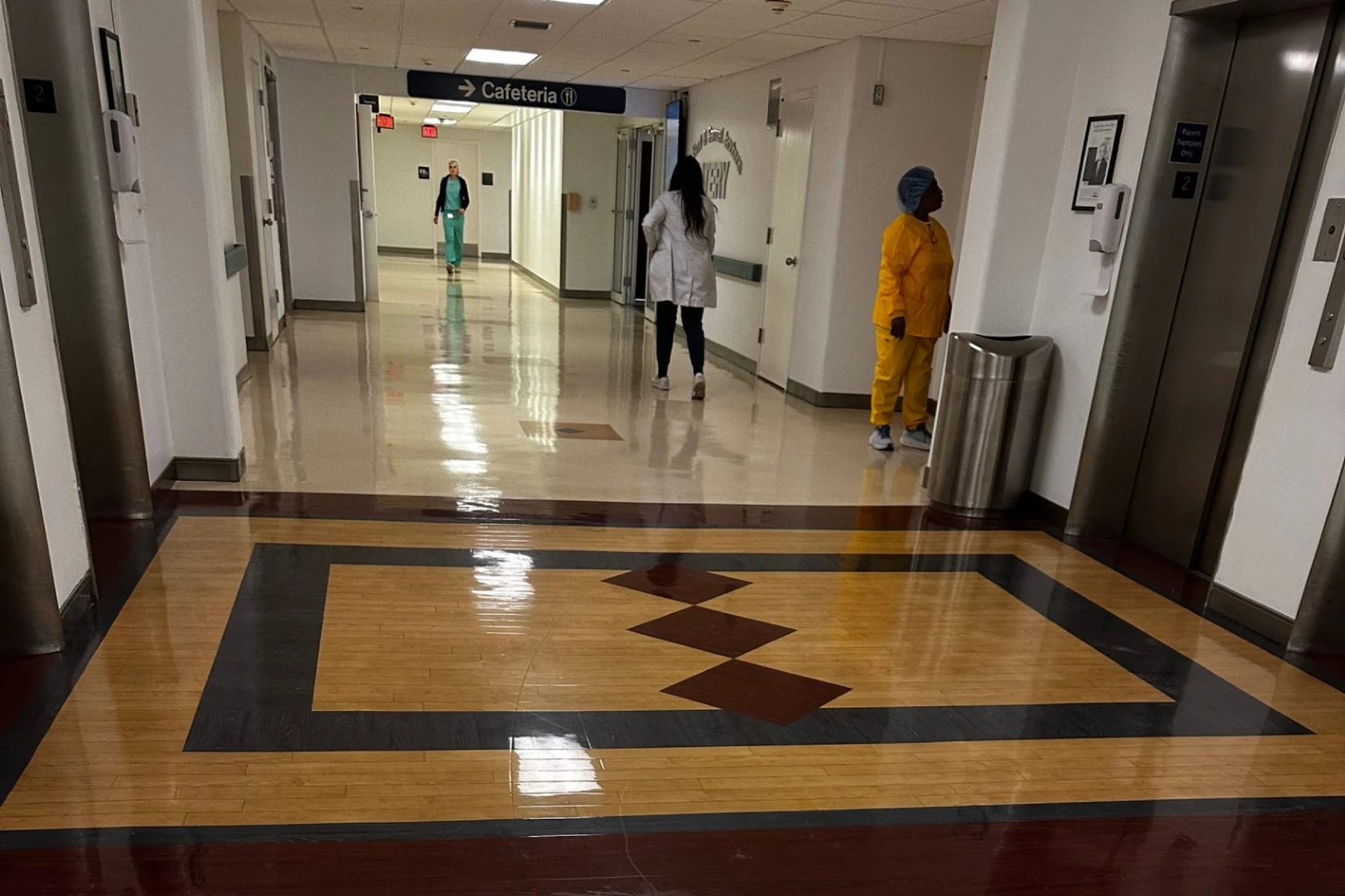
For VCT, linoleum & sheet vinyl
Clear Quartz Vinyl Floor Coating
Nobody is ripping out the vinyl, so we made it better. Clear Quartz goes over existing or new VCT, linoleum and sheet vinyl in patient rooms, corridors, ORs and medical offices and cures to a clear, high-gloss, non-porous finish that is five times stronger than traditional floor wax.
That means the weekly strip-and-rewax cycle that eats EVS hours, chemicals and off-hours access is over. The recoat cycle is measured in years, and it cuts labor and material costs by about 80%. It is the biggest square-footage savings most hospitals can make, because it covers the floors they already have.
- Seals tile seams into one continuous surface for infection control
- Clear high-gloss finish keeps floors looking new far longer
- Easy application, soap-and-water maintenance
Shop Clear Quartz Vinyl Coating →

For concrete floors
Heavy Tonnage Epoxy System
Don't let the name put you off. We named it after the agricultural facilities that first needed it, where loaded fertilizer trucks and front-end loaders destroyed every coating they tried until Heavy Tonnage solved it. Hospital traffic isn't that heavy, but it is relentless, and hard caster wheels following the same path thousands of times a day wear through thin coatings just as surely as a forklift does.
Heavy Tonnage goes on at 30 mils, ten times thicker than a conventional floor enamel, and cures to a Shore D hardness harder than a construction hard hat. We tested it by running forklifts in circles with the forks angled down into the floor. No damage. It is simply the toughest coating you can use, and ORs, corridors, mechanical rooms and sanitation areas are some of its best uses.
- Seamless, non-porous and stain resistant to blood, iodine and fluids
- Low-odor formulation for occupied facilities
- Applies over bare concrete or existing sound coatings, which cuts prep time
Shop Heavy Tonnage Epoxy →
What A Hospital Floor Has To Survive, And How We Build For It
Healthcare floors answer to infection control, environmental services, facilities and the people in the building all at once, and usually without closing anything for more than a shift. Here is what we engineer our medical-facility coatings to deliver.
Seamless & non-porous
Grout lines, tile seams and worn wax are where pathogens live. Both of our systems cure to a continuous surface with nothing for bacteria to harbor in.
Hospital-grade disinfectants
EVS runs disinfectant on a schedule, not when it's convenient for the floor. Our coatings are chemical resistant to hospital-grade disinfectants and sterilization protocols, and because the surface is non-porous the disinfectant works on top of it instead of soaking in. Daily cleaning is soap and water.
Safe to install in an occupied building
You can't clear a wing of patients to recoat a corridor. Our systems are VOC compliant and low odor, and Heavy Tonnage is available in a low-odor formulation made specifically so work can happen next to active patient care.
Back in service fast
An OR or imaging suite is measured in hours of downtime, not days. We offer rapid-cure systems for critical care areas, Heavy Tonnage goes over existing sound coatings to cut prep, and we plan phased installs so one zone is coated while the rest of the department runs.
Gurneys, beds & dropped instruments
Beds, wheelchairs, imaging carts and supply trains never stop, and instruments get dropped. At 30 mils and a Shore D hardness above a hard hat, Heavy Tonnage doesn't groove, chip or crack under rolling loads or impacts. Retail-grade and garage epoxies will.
Slip resistance where it's wet
Sterile processing, decontamination rooms, therapy pools, kitchens and loading docks are wet by design. We add safety texture to our systems only in those zones, so the rest of the department keeps a smooth floor that's easy to clean.
Walls, Mechanical Rooms, Cooling Towers & Roofs
A large medical facility is a small city of block walls, piping, mechanical equipment and roof. We coat all of it, so your facilities team sources the whole building from one manufacturer.
Industrial Epoxy Wall Coating bonds to block, brick, cement and sheetrock, fills cinder-block voids in a single coat, and is immune to the cart and bed impacts, abrasion and staining that destroy wall paint in corridors and utility rooms. Seven standard colors, custom colors available.
Steel Pipe & Metal Equipment Epoxy is an extra-thick mastic that goes over tight rust with minimal prep, applies three times thicker than standard steel paint and rounds over sharp corners. It's one of our best sellers because it's tough as nails and easy to apply. We also make coatings for leaking cooling towers and every type of roof.
Hospital & Medical Facility Floors: Questions We Get Asked Most
As the manufacturer of every type of epoxy coating there is, we know what works and what doesn't for facilities, EVS and infection control teams.
What is the best flooring for a hospital operating room?
+−
A seamless, non-porous epoxy that takes dropped instruments and daily disinfection without staining or wearing out. Our Heavy Tonnage Epoxy System is our OR specification: 30 mils thick, harder than a construction hard hat, stain resistant to blood, iodine and medical fluids, and available in a no-odor formulation so adjacent rooms stay in use during installation.
If the OR already has sound sheet vinyl, our Clear Quartz Vinyl Floor Coating seals it into a single sanitary surface without replacing the floor, with a recoat cycle measured in years instead of a weekly strip-and-wax.
Can epoxy flooring be installed in an occupied hospital without odor problems?
+−
Yes. Our healthcare systems are VOC compliant and low odor, and Heavy Tonnage comes in a no-odor formulation made specifically for occupied facilities. Combined with phased installation, coating one corridor section or room at a time, work proceeds alongside patient care rather than waiting for a wing to be emptied. Tell us which areas stay occupied and we'll spec the formulation and the sequence.
Do epoxy floors hold up to hospital-grade disinfectants?
+−
Yes. Our coatings are acid and chemical resistant to hospital-grade disinfectants and sterilization protocols, and because the cured surface is non-porous the disinfectant works on the surface instead of soaking into it, which is also why blood, iodine and other fluids wipe up rather than staining. Routine cleaning is soap and water. If your EVS team uses a specific product or concentration, send us the SDS and we'll check it against our resistance data.
How do we stop stripping and waxing VCT floors in a hospital?
+−
Replace the wax with our Clear Quartz Vinyl Floor Coating. It's five times stronger than traditional floor finish, so the strip-and-rewax cycle that consumes EVS hours, chemicals and off-hours access ends. It applies over existing or new VCT, linoleum and sheet vinyl in patient rooms, corridors, ORs and medical offices, and leaves a clear high-gloss finish that keeps the floor looking new far longer.
Will epoxy stand up to gurneys, patient beds and wheelchair traffic?
+−
Industrial-grade epoxy will; retail-grade and garage-floor epoxies will not. Hospital corridor traffic isn't heavy, but it is relentless, and hard caster wheels following the same path thousands of times a day wear through thin coatings just as surely as a forklift does. Heavy Tonnage was built for exactly that kind of repetitive abuse: 30 mils thick with a Shore D hardness that doesn't groove or chip under rolling loads or dropped equipment.
How do you recoat a hospital corridor or OR without extended downtime?
+−
Three things work together. Our rapid-cure systems bring critical areas back into service in hours instead of days. Heavy Tonnage can be applied over existing sound coatings, which removes most of the prep time. And we plan phased installations so a corridor is coated in sections or an OR is done during a scheduled block, with adjacent rooms in use throughout. Give us your shutdown windows and we'll build the schedule to fit them.
Can the floor be made slip resistant in wet areas like sterile processing or therapy rooms?
+−
Yes. Safety textures can be added to our floor systems in the zones that need them, including sterile processing and decontamination, therapy pools and hydrotherapy, kitchens, loading docks and ambulance bays, while the rest of the department keeps the smooth, easy-to-clean finish. Tell us which rooms are wet and we'll spec texture only where it earns its place.
What do you use on hospital walls, mechanical rooms and equipment?
+−
For walls, our Industrial Epoxy Wall Coating. It bonds to block, brick, cement and sheetrock, fills cinder-block voids in a single coat, and is immune to the cart and bed impacts, abrasion and staining that destroy wall paint in corridors and utility rooms.
For mechanical rooms, piping and equipment, our direct-to-metal epoxy mastic goes over tight rust with minimal prep, applies three times thicker than standard steel paint and rounds over sharp corners. We also carry coatings for cooling towers and roofs, so a facilities team can source the whole building from one place.
Tell Us What Floor You Have. We'll Tell You What To Order.
Send us the floor type (concrete, VCT or sheet vinyl), the square footage and which areas stay occupied, and ArmorGarage will spec the system, the formulation and the phasing, and quote volume pricing for the whole project. One manufacturer for the floors, walls, equipment and roof.


 All Standard & Safety Colors
 One Coat Coverage
 Bonds To All Ferrous Metals


