

-

Military Industrial Epoxy Floor System - Large Format 1500 SF & Larger
Military grade durability engineered for heavy duty service with a superior high gloss finish 12 Standard Colors
 Geared For Larger Projects - Sold By The SF to Match The Size Of Your Floor
 Turnkey Package To Do The Job Right
-

Epoxy Coating For Steel Pipe & Metal Equipment
This extra thick epoxy mastic is 3x thicker than standard steel paints.
All Standard & Safety Colors
One Coat Coverage
Bonds To All Ferrous Metals
-
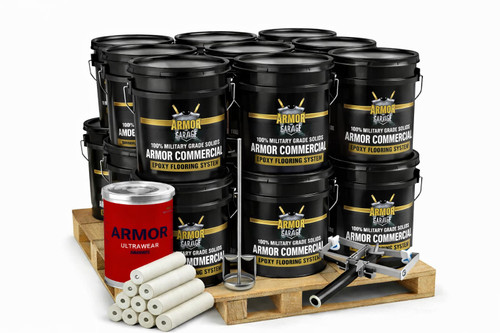
Large Format: Two Layer Commercial Epoxy Flooring. 1500 SF & Up.
Commercial Grade Epoxy & Topcoat For Heavy Duty Traffic In Warehouse, Shops & Factories
Solid Color High Gloss Finish Without Flakes
Complete Turnkey System For Larger Floors Shipped DIrect To You
Sold By The SF to Match Your Floor Size.
-

Heavy Tonnage Industrial Epoxy Floor Coating
Toughest, longest lasting epoxy coating you can apply to any floor.
6 Standard Colors
2 Layers - Primer + Special Epoxy Topcoat
Bunker Hardened For The Heaviest Traffic Loads
-

Standard Duty Chemical & Acid Resistant Epoxy Floor Coating
Cost effective Novolak protection for floors with medium corrosive exposure
3 Colors - Semi-Gloss Finish
2 Layers
DIY Friendly - Save 80%
-

Industrial Epoxy Wall Coating
Best vertical wall epoxy coating for protection against abrasion and caustic washdowns.
7 Colors. Custom Colors Available
Fills In Cinder Block Voids In 1 Coat
DIY Friendly & Far Superior Than Paint!
Aerospace Floors & Walls
Epoxy Flooring for Aerospace Facilities
Turnkey epoxy systems for manufacturing, maintenance, and repair — trusted by the US Coast Guard and aerospace facilities nationwide. Highly resistant to solvents, impacts, heavy traffic loads, and heavy tire abrasion.
★ Don't take a chance on costly downtime due to an epoxy coating failure • ArmorGarage coatings are known to be the longest-lasting.✔Manufacturing & Assembly
✔Maintenance Shops
✔Reduce Maintenance Costs
✔Expert 7-Day/WK Support
Maintenance & Repair Facilities
Complete turnkey epoxy flooring systems for aerospace repair and maintenance facilities. It's why the US Coast Guard and commercial facilities across the country rely on us for the longest-lasting floor protection.
- Commercial System (2-Layer): Light to medium-duty — small and large size formats
- Military-Industrial System (3-Layer): Medium to heavy-duty applications
- Heavy Tonnage System (2-Layer Chemically Hardened): For extra heavy to extremely heavy-duty applications — virtually indestructible
- Withstands: Heavy aircraft traffic loads, repetitive forklift traffic, pallet jack traffic, aircraft solvents & fuels, industrial acids and high impacts.
- Privedes: High gloss light reflecting easy to keep clean surface. Safety colors available for hazardous areas.
Manufacturing & Assembly Facilities
For aerospace manufacturing facilities with medium to heavy-duty traffic, the Military-Industrial Epoxy Floor System is available in small and large format. Large format ships on pallets with larger-sized application tools for bigger projects.
For heavy-duty to extremely heavy-duty traffic, the Heavy Tonnage System sits at the top of the Shore D Hardness chart — virtually indestructible.
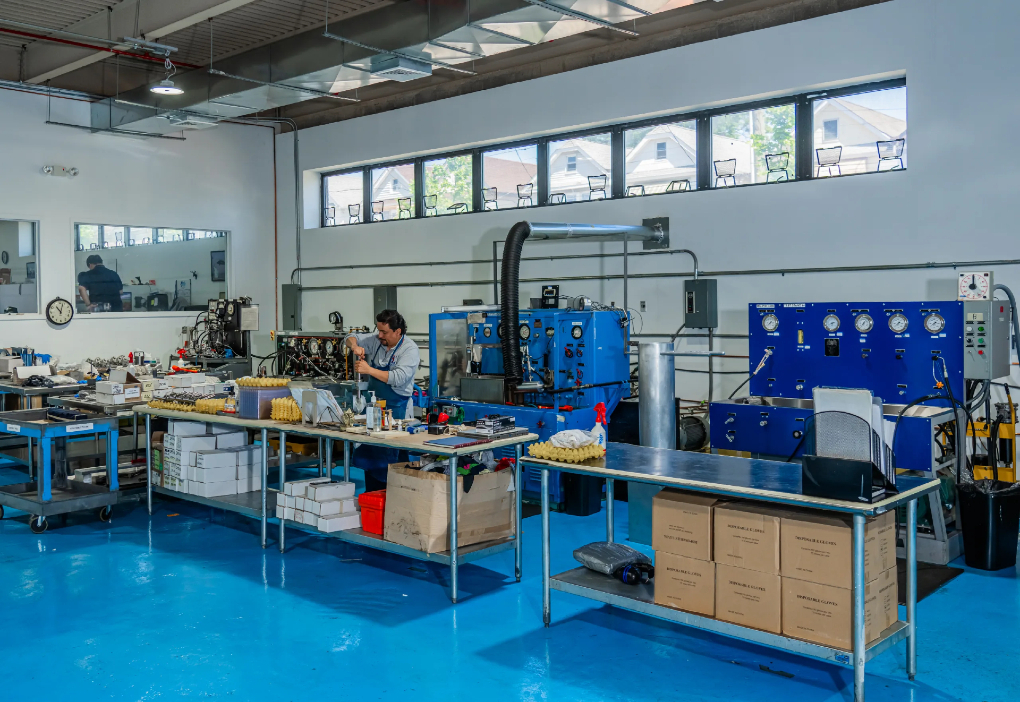
Custom colors available for orders of 6,000 square feet or more. All images below are floors installed by SL Aerospace maintenance staff using the Military-Industrial System.
Built to Stay Looking New the Longest
When you can't afford unplanned downtime or a shabby-looking facility, these are the go-to products. Engineered to outlast traditional epoxy coatings with the best impact and abrasion ratings in the industry.
Any epoxy floor coating can stay stuck to your floor — it's how long it stays looking new that counts. ArmorGarage products maintain their high-gloss finish years after installation.
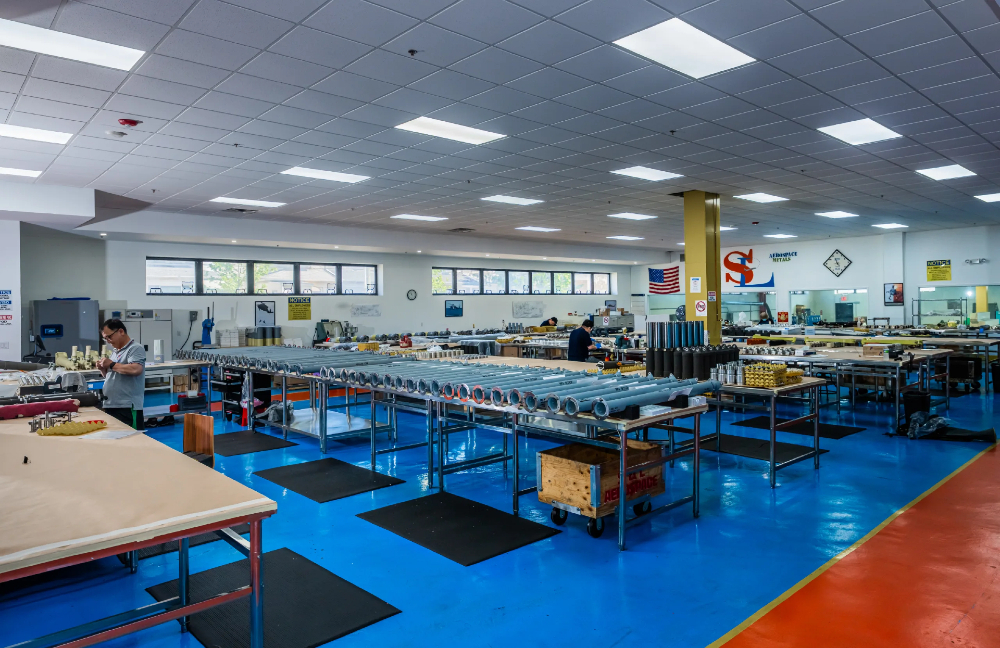
Easy to Order — Ships Direct to Your Facility
Simply input your floor's square footage and we'll deliver everything you need in sufficient quantities directly to your facility with free shipping. No prior experience needed for professional results.
Each epoxy floor option offers a worry-free installation that will outlast the competition by far. Don't take a chance on your facility's floor failing and causing costly downtime.
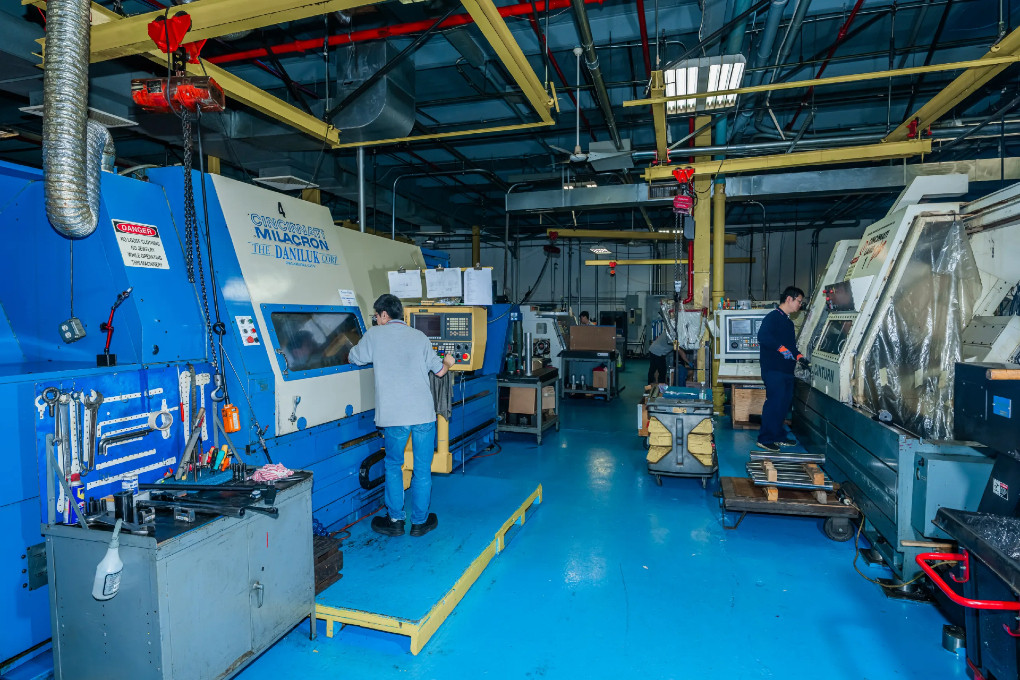
Trusted by the US Coast Guard
US Coast Guard facility coated with ArmorGarage Commercial Epoxy System — proof that our products meet the demands of the most critical aerospace and aviation environments.

Aircraft Hangar & Repair Flooring
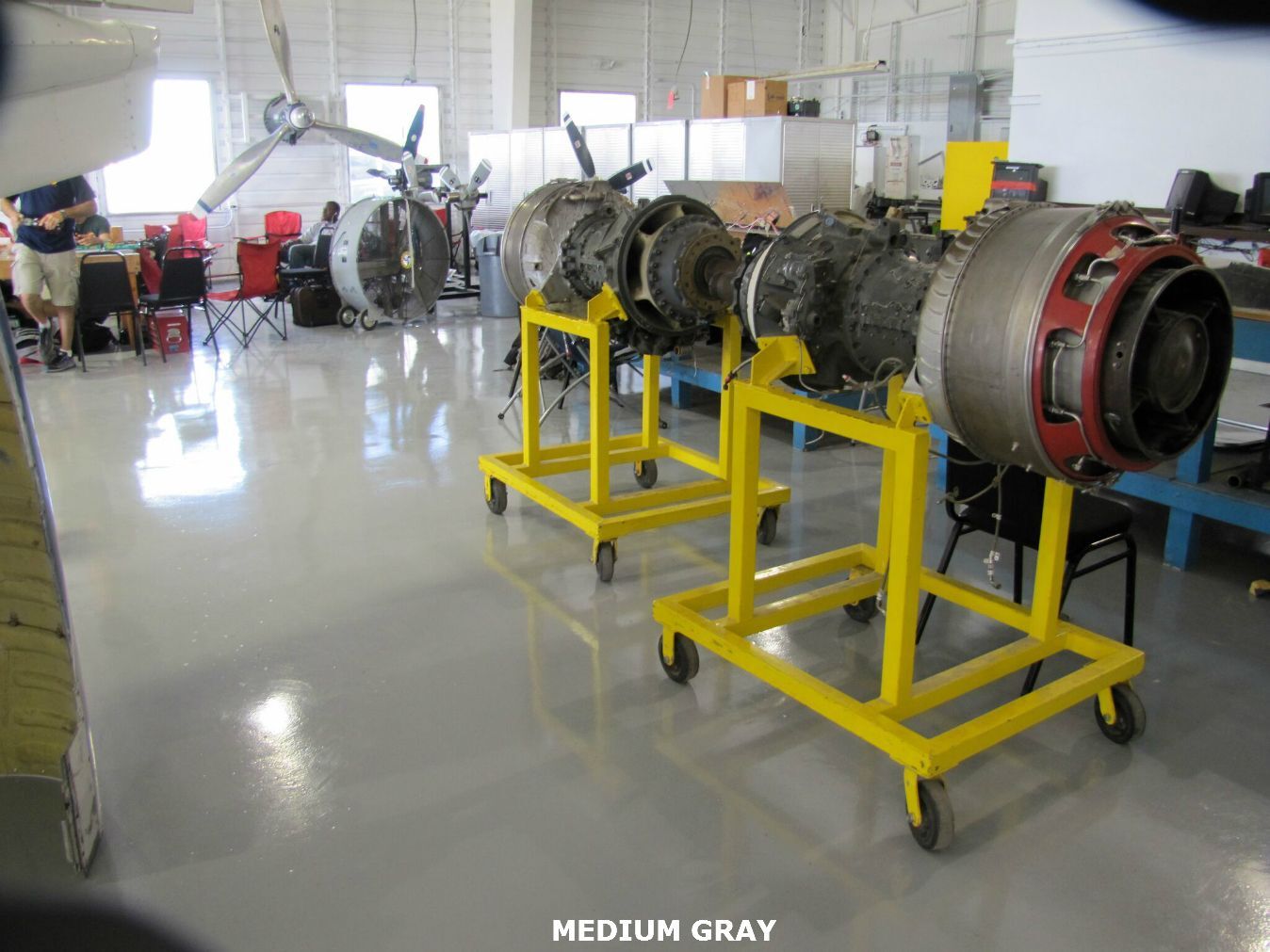
Seamless industrial epoxy flooring that handles the unique demands of aircraft hangars — jet fuel spills, hydraulic fluid, and constant equipment movement. This Spirit Airlines hangar was done with the ArmorGarage Heavy Tonnage Epoxy in medium gray with safety line striping.

Aerospace Flooring Questions, Answered
What Hangar, MRO and Aerospace Production Floors Need From an Epoxy System
We manufacture these systems and have put them down in Coast Guard helicopter hangars, corporate jet hangars and aerospace production plants. These are our answers from the floor, not a spec sheet.
What is the best epoxy flooring for aircraft hangars and aerospace facilities?
A multi-layer, 100%-solids epoxy system with a urethane-fortified topcoat — not a single-coat product. The right one depends on the traffic: our two-layer Commercial System for light-to-medium duty hangars and shops, the three-layer Military-Industrial System for medium-to-heavy duty, and the chemically hardened Heavy Tonnage System for the heaviest aircraft and equipment traffic.
What separates them is film thickness and the hardness of the wear layer. The Commercial System cures to roughly 12 mils with an 8 mg abrasion rating; the Military-Industrial System to 25–30 mils at 4 mg; Heavy Tonnage to 30 mils at 3 mg with a Shore D hardness that exceeds a construction hard hat. Retail epoxies rate 25 mg and higher — at that point the floor is no harder than semi-gloss wall paint, which is why they peel under tow tractors within a couple of years. The U.S. Coast Guard selected our Commercial System for its helicopter maintenance hangars after testing alternatives; SL Aerospace's own maintenance staff installed the Military-Industrial System on their production floors.
Will an epoxy floor stand up to jet fuel, hydraulic fluid and aviation solvents?
Yes. All three of our hangar systems are rated for solvents, fuels, oils and acids — Jet-A, avgas, engine oil, de-icing fluid and the solvents used in MRO work wipe off a cured 100%-solids epoxy without etching or staining, which is exactly what bare concrete can't do.
Two cases get a different answer. Floors with constant exposure to strong acids or caustic wash-downs — battery shops, plating and chemical process areas — should use our Chemical & Acid Resistant novolac epoxy, which is formulated for immersion-grade exposure. And phosphate-ester hydraulic fluids such as Skydrol are the harshest thing on any aircraft floor: [CONFIRM — our topcoat's rating against Skydrol/Hyjet, or state that spills should be cleaned promptly and we'll match the topcoat to the fluids on your floor]. Tell us which fluids your facility handles and we'll specify the topcoat before you order rather than after.
Can an epoxy floor take the weight of aircraft landing gear, tow tractors and forklifts?
Yes — our Commercial and Military-Industrial Systems are rated for aircraft up to Gulfstream G650 class, and the Heavy Tonnage Epoxy System is built for the largest commercial & military aircraft traffic loads, point loads of jacks, tugs and forklifts on hard tires. The epoxy bonds into the concrete rather than sitting on it, so there is nothing to delaminate under a concentrated load.
The failure you're guarding against isn't the floor crushing — a properly prepared slab carries the weight — it's the coating shearing off at the tire contact patch when a loaded tug pivots. That is a bond and hardness problem. Our base coats penetrate the slab so deeply that a pull test removes the top layer of concrete before it separates the coating, and the topcoats are hard enough that we've run forklifts over Heavy Tonnage with the blades down and left no mark. Fill control joints only on slabs five years or older; on newer slabs we leave them open so slab movement never shows in the floor.
Does a high-gloss epoxy floor improve hangar lighting and FOD visibility?
Noticeably. A light gray or white high-gloss epoxy floor reflects overhead and under-wing light back up instead of absorbing it into dull gray concrete, so technicians see dropped hardware, safety wire and debris they would walk past on a bare slab.
That's why Light Gray and Medium Gray are the standard colors in nearly every hangar we coat — bright enough to show foreign object debris, dark enough to hide tire marks between cleanings. The seamless surface helps too: there are no joints or pores for small parts and grit to lodge in, so a FOD walk is a visual sweep rather than a search, and spills blow or wipe off instead of soaking in. Our topcoats hold that gloss for years because the urethane-fortified wear layer doesn't dull or chalk the way solids-only epoxy does under UV and traffic.
Do you offer ESD or conductive epoxy flooring for avionics labs?
[CONFIRM — if no: ] Not as a stock system. Our aerospace floors are built for hangars, MRO shops and production bays; a static-dissipative avionics lab needs a dedicated conductive system with grounding straps and a resistance spec, and we'd rather tell you that than sell you the wrong floor. Talk to us about the lab and we'll either quote a conductive formulation on a project basis or point you to the right product.
For the rest of the facility — the hangar floor outside the lab, the shop, corridors and wash bays — the standard systems on this page are the right call, and keeping the ESD zone to the rooms that actually need it saves a great deal of money per square foot.
Can safety striping, walkways and bay borders be built into the floor?
Yes. We supply safety line striping kits in yellow, red, blue and black — 600 lineal feet at 4" wide per kit — that are made from proprietary factory ground pigments rather than traditional liquid tints provide thicker coverage and much longer durability.
Ued for: Bay borders, tow paths, pedestrian walkways, hazard zones around fuel, chemical and oxygen stations and company logos. For large facilities we also stock Traffic Yellow and Safety Yellow as full floor colors, and custom colors are available on orders of 6,000 square feet or more.
What layers make up an aerospace epoxy floor system?
A penetrating primer that locks into the prepared concrete, a 100%-solids epoxy build coat that carries the thickness and the color, and a urethane-fortified topcoat with a non-slip additive that takes the wear, the chemicals and the UV. Our two-layer systems combine the primer and build coat; the three-layer Military-Industrial System separates them with a high build 100% solids epoxy for a thicker, harder floor.
Every ArmorGarage system ships complete: floor prep solution and neutralizer, each coating in the quantity your square footage needs, 18" rollers and frames, mixers, spiked soles, calibrated squeegees and the micro-tubular aluminum non-slip additive that acts like rebar inside the topcoat. The non-slip is what makes the gloss floor safe under a coolant or fuel spill. Easy to ordr - You enter your square footage, we calculate the amount of liquids and application tools needed, pack it onto pallets and ship it to your facility.
Can our own maintenance crew install it, and how long is the hangar out of service?
Yes — these are turnkey systems designed for first-time users, and the hangars and plants pictured on this page were done by the facilities' own staff. Plan on two to three days per section: a day of prep, the coats at 4–8 hours apart, light traffic the next day and full aircraft and forklift duty in 48 hours.
Large hangars are done in sections so the facility stays in service; Dynamic Race Works put down 20,000 square feet over one extended weekend with in-house crew. Preparation is the whole job — a diamond-ground or acid-etched slab that water soaks into, every oil stain removed — and our techs are on the phone and email seven days a week to walk your installer through it.
How much does aerospace hangar epoxy flooring cost per square foot?
In material, delivered free: $1.32–$1.82 per square foot for the Commercial System, $2.00–$2.50 for the Military-Industrial System and $2.50–$2.90 for Heavy Tonnage, with volume pricing on large floors. Contractor-installed epoxy runs $6–$9 per square foot and often uses a thinner product.
The number that matters in a hangar is cost per year, not cost per foot. A thin coating that fails in two years under tug traffic has to be diamond-ground off and redone, with the bay out of service twice. Our systems are rated for 10–15+ years of service, and when a topcoat finally shows wear it's a scuff-and-recoat, not a start-over. Send us your square footage and the traffic you run and we'll price the right system and tell you how many pallets to expect.
Plan Your Aerospace Facility Project
Tell us about your facility requirements and we'll recommend the right system — with volume pricing for large installations.
Talk to an expert at 866-532-3979 — info@armorgarage.com or Request a Quote for fast project pricing and volume discounts.