
Garage Floor Epoxy vs Garage Paint Which One Works Best In 2026
Posted by ArmorGarage LLC on Dec 29th 2025
Upgrading a garage floor raises one big question. Should you trust paint or choose garage floor epoxy? Many homeowners want a strong surface that stands up to cars and tools. That is why this comparison helps you see what performs better in daily use.
Garage paint gives quick color but fades under weight and heat. Garage floor epoxy forms a dense layer that grips concrete and stays firm. It handles oil drops, rolling jacks, sharp tools, and weekend projects without wearing down.
ArmorGarage epoxy coatings give longer strength because the mix bonds tight with concrete. The finish keeps stains out and holds a smooth shine. This makes epoxy a smarter pick when you need lasting protection.
What is Garage Floor Epoxy?
Garage floor epoxy forms a thick coat that chemically bonds into concrete with strong force. The mix uses resins and hardeners to build a hardshell finish.
This coating creates a tough surface that handles car weight and hot tires with ease. It blocks stains from spills and protects the concrete during daily use. The right topcoat adds gloss and protection for the epoxy layer, use the topcoat rated for the activity and traffic on your floor.
What is Garage Floor Paint?
Garage floor paint covers concrete with a thin color coat that sits ontop of the concrete and gives a quick color freshness. This type of paint works for mostly foot traffic and storage needs. It gives your space a clean look, but its thin layer only handles lighter use and is prone to wearing out fast and peeling up.
What Are the Differences Between Garage Floor Epoxy and Garage Paint?
Garage floor epoxy and garage floor paint give different results. You pick one based on strength, looks, and daily garage use. Here, you see how each option performs in the most important areas.
| Feature | Garage Floor Epoxy | Garage Floor Paint |
| Composition | Two-part resin with hardener mix. Chemically cures and bonds into concrete. | One part water, latex or acrylic based. Air dries and bonds onto concrete surface. |
| Layer Build | Multi-Layered, Multi-Product. Forms thick monolithic block | single product thin coat that adds simple color. |
| Bond Strength | Stron bond cannot be seperated from top layer of concrete | Light surface grip on the concrete top. |
| Durability | Handles cars, tools, heat, and daily work. | Handles light tasks and soft floor use. Best for foot traffic. |
| Chemical Handling | Resists stains from all vehicle fluids, road salt, and cleaners. | Stains easily from oil, road salt, and cleaners. |
| Application | Mix and roll before the cure starts. | Open the can and roll the paint. |
| Cost | Higher upfront cost with a long lifespan. | Lower cost with shorter lifespan. |
Epoxy suits garages that handle heavy cars, tools, and tough tasks. Paint suits lighter spaces that need fast color with repeated futuree coatings.
Which One Works Best for a Garage Floor?
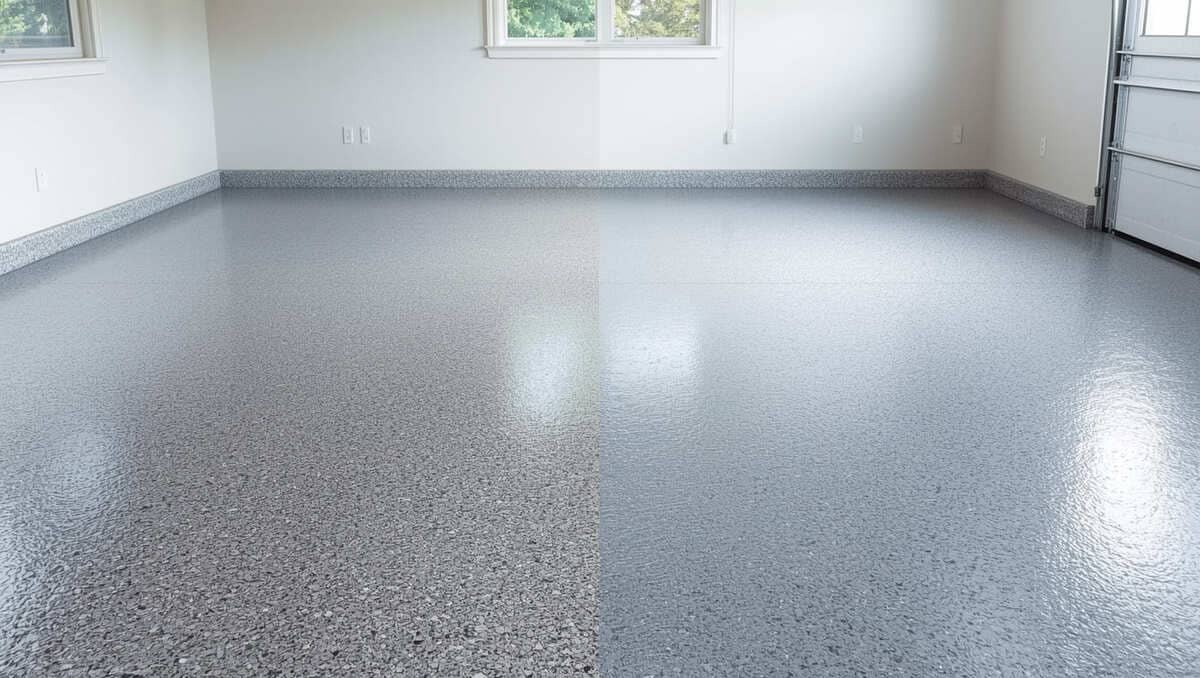
For most garages, garage floor epoxy works best. Paint suits lighter use. Garage floor epoxy and garage floor paint give different results. You pick one based on strength, looks, and daily garage use.
Epoxy forms a thick coating that resists hard use. Hot tires, dropped tools, rolling tool boxes and equipment and jacks. Garage epoxy has a beautiful high-gloss finish, garage paint is either mat or semi-gloss.
Garage floor paint suits light traffic and simple storage. It works best where you walk less and store gear.
Why Garage Paint Doesn’t Last in a Garage
Garage paint breaks down fast because garages create strong stress. Heavy wheels, hot twisting tires, and daily movement easily push the paint film past its limit.
- Thin Layer: Garage paint forms a light coat on concrete. This thin coat loses strength when cars turn or sit on it with hot tires.
- Weak Grip: Paint holds the surface with shallow contact. Sharp turns or tool drops break the paint loose.
- Soft Drying: Paint dries by air and has a soft chemical structure. Scratches form easily.
- Tire Heat Lift: Hot tires press on soft paint during parking reliquifying it. Cooling tires have paint dried paint stuck to them pulling it up from the floor.
Garage paint works for gentle use only. Busy garages, heavy storage, and hot tires break it down fast.
Why Garage Floor Epoxy Lasts Longer
Epoxy lasts longer because the mix forms a much stronger chemical structure and is applied in mulitple layers.
Epoxy flows into tiny concrete pores and locks tight like an epoxy glue. It handles hot tires, rolling weight, and sharp garage tools. Daily parking, turning wheels, and floor jacks do not affect the coating.
Epoxy resists stains from oil, salt, and garage cleaners. This strength helps the surface stay neat for many years.
Many epoxy kits include a clear top coat for extra safety. This added coat resists scratches, protects color, and slows sun fade. With both coats working together, epoxy stays strong far longer than paint.
Conclusion
Choosing paint or epoxy depends on how your garage works each day. Paint adds quick color, but it struggles with heat and weight. Needs constant repainting
Garage floor epoxy handles traffic, spills, and tool drops with stronger support. Its thick layers grip concrete and protect the floor during daily garage use. You get a coating that stays firm through parking, storage, and weekend tasks.
If you want long-term protection, epoxy is the better choice. It keeps the surface strong, safe, and neat for many years. A good garage epoxy coating is a once and done process.
Shop Commercial & Industrial Epoxy Floor Systems & Specialty Coatings