
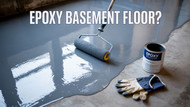
Should I Epoxy My Basement Floor?
Posted by ArmorGarage LLC on May 1st 2025
Shop ArmorGarage DIY basement epoxy kits
Dry & wet basement kits • Mold & moisture resistant • DIY-friendly • Made in USA
Turn a Plain Basement Slab Into a Durable, Finished Floor
A high-performance epoxy coating protects against moisture, mold, and wear — and outlasts carpet, laminate, or tile. With the right DIY kit, you can do it yourself in a weekend.
Dry & Wet Basement Kits • No Contractor Needed • One-Time JobShould you epoxy your basement floor?
For most basements, yes. A high-performance epoxy coating turns a plain concrete slab into a durable, moisture-resistant, easy-to-clean surface that outlasts carpet, laminate, or tile — with no grout lines to scrub and no ruin from the occasional flood. With a quality DIY kit you can do it yourself, no contractor required. The one thing to check first: whether moisture is pushing up through your slab, because that decides whether you need a dry-basement or wet-basement kit.
Why Epoxy a Basement Floor?
Basement floors are usually treated as purely functional, but with the right DIY epoxy they become attractive and highly practical. Unlike carpet or laminate, epoxy is engineered to bond to, enhance, and protect concrete — not just sit on top of it. Here's why it makes sense:
Do You Have a Dry or Wet Basement? The 48-Hour Test
This is the most important step — it decides which kit you need. Some slabs only ever get water from above (spills, an occasional overflow). Others have moisture pushing up from below the slab. Here's how to tell which one you have before you buy:
The plastic-bag test: Tape a heavy-duty plastic contractor bag or a large sheet of plastic flat against your bare slab, sealing all four edges 100% with duct tape. Leave it for 48 hours, then pull it up. No moisture underneath → you're good with a dry basement kit. Moisture, condensation, or a dark damp patch → you need a wet basement kit.
ArmorGarage makes both: a dry basement kit for slabs that only see water from above, and a wet basement epoxy kit engineered for floors with water intrusion from below. Matching the kit to your slab is what determines whether your floor lasts.
Not sure which kit you need?
Run the 48-hour test, then let our team confirm the right dry or wet basement system for your floor.
Can You Apply Basement Epoxy Yourself?
Yes — you don't need a contractor. With the right kit and a little preparation, a first-time DIYer can get a professional-looking finish. Four steps:
Prep tip: If wetting the floor to acid-etch isn't an option, the floor prep machine you can rent from Home Depot is a great alternative. Every ArmorGarage kit includes clear prep steps, the right tools (rollers, squeegees, mixing sticks), and step-by-step application instructions.
Why Epoxy Over Carpet, Tile, or Laminate?
Below grade, moisture is the enemy of most flooring. Carpet traps damp and grows mold; wood and laminate warp; tile survives but its grout lines stain and stay dingy. Epoxy is non-porous and bonds to the slab, so it shrugs off the occasional flood and stays clean and mold-free. It's a cosmetic upgrade and a functional one — adding durability, value, and healthier indoor air to a space bare concrete can't match.
Basement Epoxy: Frequently Asked Questions
Can you epoxy a basement floor that gets moisture?
Yes — but you need the right system. If the 48-hour plastic-bag test shows moisture coming up from below the slab, use a wet basement epoxy kit designed for that condition. A standard (dry) kit applied over an active moisture problem can fail, which is why the test comes first.
How long does basement epoxy last?
Years, with little to no maintenance. It's meant to be a one-time job — no repairs or replacement like other flooring. Adding a topcoat extends the life further and gives you a recoatable wear layer down the road without redoing the whole floor.
Does basement epoxy stop mold?
It helps significantly. Epoxy creates a non-porous, water-resistant barrier that doesn't absorb moisture the way bare concrete or carpet does, reducing the damp conditions mold needs and supporting healthier indoor air.
Is epoxy better than paint for a basement floor?
Yes. Regular floor paint sits on the surface and wears or peels; a true epoxy system bonds to the concrete and forms a tough, chemical- and moisture-resistant coating. A quality kit may cost more than paint up front, but it lasts for years instead of needing frequent recoating.
Can I epoxy my basement floor myself?
Yes. ArmorGarage DIY kits are made for first-time users and include the prep steps, tools, and instructions you need — no contractor required. The keys to success are thorough surface prep and following the mixing and cure directions exactly.
What finish should I choose for a basement floor?
Match it to the room. Solid colors suit utility and laundry areas, decorative flake systems hide dust and suit family rooms, and metallic finishes give a high-end look. Whatever you pick, a topcoat is strongly recommended to protect the finish and keep it recoatable.
Ready to upgrade your basement floor?
Shop our DIY dry and wet basement epoxy kits, or get help choosing the right system for your slab.
or long-lasting success.