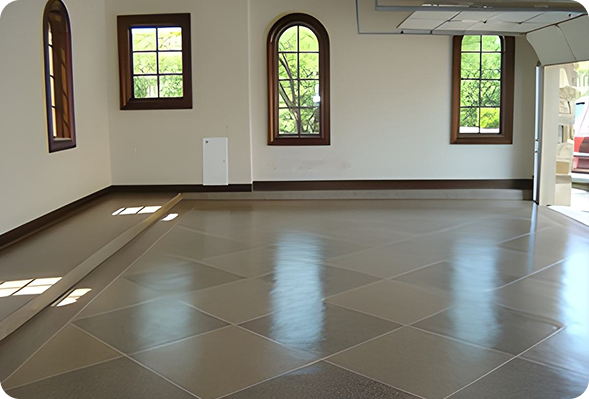
How to Prepare Your Garage Floor for Epoxy
Prep decides how long your floor holds up. A strong coat starts with a clean, open slab. These steps help you get a surface that grips the resin and stays smooth.
Take your time with each step. Your floor only bonds as well as the prep you do now. A great epoxy job still fails on a poorly prepared slab, and even the best product cannot fix a bad surface.
If you want full details, check the How To Prep & Epoxy Paint Your Floor page in the "NEED TO SECTION" before you buy anything. It shows what to avoid and what to follow so your floor lasts.
Remove Dirt, Oil, and Old Marks
Wash the slab first. Scrub oil spots until they feel dry. Sweep dust and scrape old paint so the resin touches clean concrete.
- Oil blocks grip and weakens the bond
- Sealer or wax stops the epoxy from attaching
Grind or Etch the Concrete Surface
Grinding profiles the concrete and helps the resin grab tight. A rental grinder from a local store works fine. If you skip grinding, you must acid etch the slab.
Dirty floors, new concrete, or power-troweled slabs need two full etch rounds. Rinse the surface well and power wash to move grit and dust. Etching opens the pores of your slab, allowing the epoxy to flow into them and lock in for an unbreakable bond.
Patch Cracks and Rough Spots
- Fill cracks before coating. Do not use pre-mixed compounds that chip and crack out of your floor, ruining your new high-gloss finish.
- Level raised areas so the coat spreads evenly
Fix rough spots now, for a smooth finish. Remember, the epoxy is super high gloss and will highlight any blemish
Check for moisture and allow proper Dry Time for the slab to dry after etching
Your slab must be dry before any coating. Damp concrete makes the resin pull away in the future.
Prime When Needed
A primer layer gives older floors extra strength. It also adds more build and helps the epoxy spread better. Primer is optional, but many slabs gain a lot from this step.
Primer can raise coverage up to 25% and increase floor build to 25–30 mils. For a 600–700 sq ft slab, use one 600 sq ft epoxy kit and the 900 sq ft primer option, plus the right topcoat if you choose the Military Grade finish. You get an extra epoxy layer without buying two separate epoxy kits.
Why Garage Floor Epoxy Lasts So Long
Garage epoxy holds up because the coating forms a tight grip on the concrete. Thick coats form a monolithic block on the slab and withstand the pressure of daily parking. A solid, thick block also keeps heat, weight, and sharp turns from breaking the finish.
A strong topcoat layer helps block scratches and stops stains from fluid spills, oil drips, snowmelt, and road salt. This allows the floor to handle rough use without breaking down.
- Thick coats do not reliquify under hot tire contact like low-quality paints and thin build epoxies
- Military garde resins help withstand heavy pressure and wear points
- Urethane top layer shields the epoxy layer from fluid stains, UV rays, and repetitive drive paths
- Chemical bond strength helps stop peeling near wheel paths
Epoxy lasts because the coating stays tightly adhered to the floor when you properly prepare it, and the surface stays protected through every drive in and out.