

What are the benefits of applying epoxy to a garage floor?
Posted by ArmorGarage LLC on May 8th 2026
What Are the Benefits of Applying Epoxy to a Garage Floor?
Quality epoxy garage floor coatings deliver eight measurable benefits: 9,800+ PSI compressive strength (vs. concrete's 3,000-4,000 PSI), 4-8 mg abrasion loss rating on military-grade topcoats, chemical resistance to all vehicle fluids and cleaners, 10-20+ year lifespan with quality manufacturer kits, 500-1,100% home value ROI on DIY installations, seamless waterproof barrier that prevents concrete pitting and deterioration, customizable aesthetics, and easy sweep-and-mop maintenance. Most online articles cite vague claims like "3x stronger than concrete" or "up to 20 years" without backing data — this guide gives you the actual manufacturer-grade specs that determine whether you get these benefits or not.
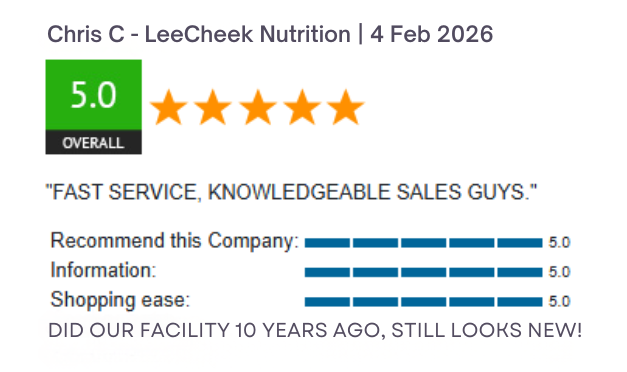
Search "benefits of epoxy garage floor" and you'll find dozens of nearly-identical articles from contractor blogs and aggregator sites repeating the same vague claims: "up to 3x, 10x and even 20x stronger! than epoxy," "lasts up to 20 years," "industrial-grade strength." None of them prove it, see our Case Studies for our proof of how durable our epoxy floors are. See testimonial reviews from our customers how good our epoxy floor coatings are.
Most posts you'll read don't differentiate between cheap kits and quality systems. None of them tell you that most of those benefits only apply to true 100% solids epoxy with a urethane topcoat of the highest quality— not the water-based, high solids or low quality 100% solids products that fail in 1-3 years.
As an epoxy manufacturer with 25+ years of experience, here's the honest version with real numbers.
Quick Reference: Epoxy Benefits With Actual Numbers
| Benefit | What Other Sites Say | The Actual Manufacturer Spec |
|---|---|---|
| Strength | "Up to 3x stronger than concrete" | 9,800+ PSI vs. 3,000-4,000 PSI concrete |
| Lifespan | "Up to 20 years" | 10-20 years on quality systems depending on product used and traffic type, 1-3 on cheap kits no matter what |
| Wear Resistance | "Industrial-grade durability" | 4-8 mg abrasion loss (military topcoat) vs 25-40 on competing topcoats (lower the number the better) |
| Adhesion | "Bonds chemically to concrete" | 375+ PSI pull strength (pulls concrete off first) |
| Thickness | "Thick protective coating" | 14-30 mils (vs. 2-4 mils for water-based) |
| Solids Content | "100% solids epoxy" | 100% in BOTH weight AND volume (most fake this) |
1. Extreme Strength — The "3x Stronger" Claim Decoded
Other sites say epoxy is "up to 3x stronger than concrete." That's vague enough to be useless. Here's the actual data: bare concrete has compressive strength of 3,000–4,000 PSI. Quality epoxy systems deliver 8,000-9,800+ PSI compressive strength — that's 2.5x to 3.3x stronger, depending on which epoxy.
But "stronger than concrete" understates the benefit. The coating also adds 14–30 mils of impact-absorbing film that protects against dropped tools, hot tires, and dragged equipment. Cheap water-based epoxy is only 2–4 mils thick — barely thicker than oil-based paint, with none of the impact protection.
If a company can't tell you the compressive strength, the mil thickness, and the abrasion loss rating in PSI/mils/mg, they don't actually know how strong their product is. See our epoxy thickness guide for the full breakdown.
2. Chemical & Stain Resistance — What "Resistant" Actually Means
Most sites say epoxy "resists chemicals" without specifying which chemicals or for how long. That's because not all epoxies handle the same chemicals.
Quality manufacturer-grade epoxy is non-permeable and resists all vehicle fluids including battery acid, motor oil, gasoline, brake fluid, antifreeze, hydraulic fluid, road salt, and all household chemicals. Spills wipe off without staining the surface or penetrating into the concrete underneath.
Bare concrete absorbs all of these immediately and stains permanently within hours. Cheap water-based epoxy resists them for a few months, then starts staining as the coating breaks down which leads to peeling and other failures.
3. Lifespan — "Up to 20 Years" Is Misleading
Articles claiming "epoxy lasts up to 20 years" are technically true but practically misleading. The "up to" is doing all the work in that sentence. The actual lifespan range is enormous:
- Big-box store kits (water-based): 1 year before peeling, hot tire pickup, or wear-through
- Mid-tier "High Solids" " Low Quality 100% solids" kits: 1-3 years if applied correctly
- Quality manufacturer systems with urethane topcoat: 15–20 years documented
The lifespan you actually get depends on three factors: solids content (must be 100% in both weight AND volume), made from the highest quality compnents and not low grade or cheap imported components, topcoat with the hardest wear resistant finish (urethane with lowest abrasion loss ratings), and surface preparation. Cheap kits skip the topcoat entirely or use one that is no better than standard garage floor paint — that's why they fail so fast. See our epoxy lifespan guide for documented case studies of 16-17 year old installations.
4. Home Value ROI — The Number Nobody Else Mentions
This is the benefit most "benefits of epoxy" articles barely mention — probably because contractor sites don't want to highlight DIY ROI. But it's one of the strongest benefits.
A $899 ArmorGarage Armor Granite DIY kit on a 2-car garage typically adds $5,000–$10,000 in perceived home value. That's a 500–1,100% ROI — making epoxy one of the highest-ROI home improvements measured by cost recovery.
Compare that to a kitchen remodel (70–85% ROI) or bathroom remodel (55–70% ROI). The math heavily favors epoxy. See our Home Value ROI Guide for the full breakdown by garage size.
5. Easy Maintenance — The Concrete Dusting Problem
Sites mention "easy to clean" but rarely explain what they're comparing it to. Here's the actual contrast: bare concrete continuously sheds fine dust as it wears — that's the gritty residue you find on garage tools, car exteriors, and the bottoms of shoes. This concrete dusting never stops on bare slabs. Bare slabs are prone to pitted form winter slush and road salts and chemicals that leach out of yur tires.
Quality epoxy seals the concrete completely, eliminating dusting, pitting and surface deterioration permanently. Maintenance becomes a quick sweep and occasional mop — same effort as cleaning a tile floor. Spills wipe off rather than absorbing. No specialty cleaners required.
6. Aesthetics — Beyond "Showroom Finish"
"Showroom finish" gets thrown around in every benefits article. What that actually means: high-gloss epoxy reflects roughly 90% of available light, brightening the garage significantly. Most homeowners notice they need fewer overhead lights after installation.
Customization options most articles skip: solid colors, decorative chip flakes (5%-90% coverage), metallic pigments creating 3D marbled effects, or quartz aggregate finishes. Each finish style has different durability and aesthetic tradeoffs — not just "looks better than bare concrete."
7. Safety — What Most Sites Get Wrong About Slip Resistance
Most articles claim "epoxy includes anti-slip additives." That's only sometimes true — many cheap kits skip the anti-slip additive entirely, and high-gloss epoxy without additive is genuinely slippery when wet. Many rely on color falkes to add texture to the floor and they do but not enough to claim slip resistant.
Quality manufacturer kits include non-slip additive standard. Quality epoxy is also naturally fire-resistant, mold-resistant, and mildew-proof because the surface is non-porous — nothing can grow on it or beneath it. These benefits are real, but the slip resistance specifically depends on whether your kit actually includes the additive.
8. Moisture & Radon Protection
Quality epoxy creates a seamless waterproof barrier that prevents water from penetrating into the concrete slab, all concrete is porous. This protects against efflorescence (white mineral deposits), rust on stored items, and the slow concrete deterioration that comes from constant moisture cycling.
For homes with elevated radon levels, a properly applied epoxy floor reduces radon emission from the slab. This isn't a substitute for a proper radon mitigation system, but it's a meaningful additional barrier.
The Catch: These Benefits Require Quality Epoxy
Here's what other "benefits" articles won't tell you: none of these benefits apply to cheap big-box store epoxy and low quality epoxy coatings being marketed as heavy duty & industrial grade. The water-based products at Home Depot and Lowes deliver maybe 2–3 of these benefits at a fraction of the duration before failing.
To actually get the benefits listed above, you need:
- True top quality100% solids epoxy — in both weight AND volume on the technical data sheet. Not all 100% solids epoxies are created equal. Don't rely on just an epoxy being 100% solids, there's far than that involved when you want a floor that last a decade or more.
- Multi-layer system — primer, base coat, AND topcoat (not single-coat)
- Urethane topcoat with documented abrasion loss rating (4–8 mg ideal)
- Proper concrete prep — the surface must be etched or ground for adhesion
- Quality manufacturer — Remember any manufacturer can make an epoxy that sticks to your floor and looks good when you first put it down, it's how long it stays looking new that counts. So when you ask what's the difference between this 100% solids epoxy that's more expensive than this 100% solids epoxy, that's your answer. One stays looking new for a decade plus while the other generally fails in under 2 years.
For more on what to look for in any epoxy company, see our How To Choose The Best Epoxy Flooring Company guide.
FAQ: Epoxy Garage Floor Benefits
Is epoxy worth it for a garage floor?
Yes — quality epoxy delivers 500–1,100% home value ROI on DIY installations, lasts 15–20 years, and eliminates concrete pitting and surface deterioration permanently. The catch: this is only true for top-quality, true 100% solids epoxy with a chemically hardened urethane topcoat. Cheap, low-quality epoxy kits fail in 1–3 years, even ones that are 100% solids and aren't worth the effort.
What is the main benefit of epoxy garage floor?
The single biggest benefit is durability that doesn't require recoating. Quality epoxy with a urethane topcoat lasts 15–20 years with minimal maintenance — meaning you do the project once and never think about your floor again. Most other benefits (chemical resistance, impact resistance, easy cleaning, beautiful reflective surface) flow from this core durability.
Does epoxy actually make a garage floor stronger?
Yes — quality epoxy delivers 9,800+ PSI compressive strength compared to concrete's 3,000–4,000 PSI baseline. The coating also adds 14–30 mils of impact-absorbing film that protects against dropped tools and hot tires. The strength claim is real, but the specific number depends on the product — ask for the technical data sheet to verify.
How long do the benefits of epoxy actually last?
For quality manufacturer systems with urethane topcoat: 15–20 years. For mid-tier kits: 4-5 years. For cheap big-box water-based kits: 1–3 years before peeling. The "up to 20 years" claim you see online is technically possible but only achieved with quality systems — not the products most homeowners actually buy.
Does epoxy garage floor add home value?
Yes — quality epoxy increases home value by 5–15% on the garage portion. A typical 2-car garage gains $5,000–$10,000 in perceived home value from a $899 DIY epoxy kit, putting it among the highest-ROI home improvements available. The ROI is highest in active resale markets and on multi-car garages.
What is the disadvantage of epoxy garage floor?
The main disadvantages: requires proper surface preparation (skip this and the floor fails), can be slippery without anti-slip additive, can't be applied over moisture-intruded concrete without a moisture barrier primer, and not all epoxy products deliver the benefits typically claimed. Cheap kits cause most of the negative reputation epoxy sometimes gets.
Bottom Line: The Benefits Are Real, But Conditional
The eight benefits above are all real and measurable — but only with quality epoxy. The "benefits of epoxy" articles flooding Google and Reddit aren't lying about the benefits existing; they're just not telling you that those benefits depend entirely on what you actually buy, they are not a given or automatic.
Buy a $79 single-coat water-based kit and you'll get a thin coating that fails in 18 months. Buy a $899 quality manufacturer kit with multi-layer system and urethane topcoat and you'll get all eight benefits for 15–20 years. The product and who you buy from matter the most.
For more on selecting the right epoxy product for your specific garage, see our Garage Epoxy Flooring systems, our Paint vs Epoxy Comparison, or use our Interactive Product Selector.