

All Purpose Epoxy Coating For Charging & Caustic Wash Down Areas
Affordable Novolak protection that resists hundreds of chemicals— without the cost of a full hazardous-duty system.
Economical Acid & Chemical Resistant Protection
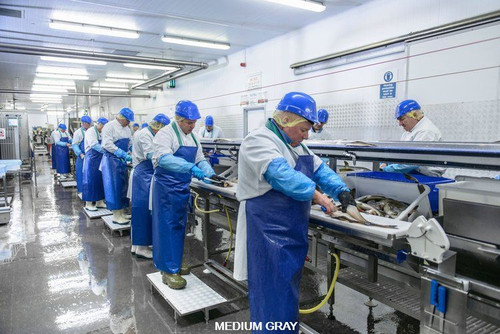
If your facility is exposed to low-level chemical and acid hazards — charging stations, caustic wash-down areas, fertilizers, or other moderately corrosive agents — this system will save you money and provide long-term protection. It is ideal for grow facilities, breweries, large warehouses with electric forklifts, and any operation that relies on caustic cleaning processes. Food production facilities that require frequent caustic wash-downs will benefit greatly, as standard epoxies break down quickly under these conditions.
Keeping concrete from being destroyed by corrosive fluids has always been expensive. Standard epoxy floor coatings — even ours — either fail outright or break down within a year or two depending on exposure. Our customers asked us to develop an affordable acid and chemical resistant floor coating that actually lasts.
This package features two coats of our Novolak pigmented base coat — at roughly 50% less than our full Heavy Duty Novolak Acid System. The dual-layer Novolak base provides excellent adhesion and protection for areas without heavy vehicle traffic. Many chemically exposed areas see minimal traffic and minor spills are cleaned up quickly — these applications don't require the expense of a full hazardous-duty system. Corrosive fluids will never penetrate both layers of the Novolak base coat, giving you the best of both worlds: economical pricing with resistance to hundreds of different acids and chemicals.
We also offer solutions for oil-stained floors and existing coatings that are wearing out. Our Oil Stain Primer and Bonding Primer make it possible to coat floors that were previously uncoatable or very difficult to recoat.
Where To Use
Have a Tough Floor?
Oil-stained concrete or a failing existing coating? Our Oil Stain Primer and Bonding Primer solve the two most common obstacles — making previously uncoatable floors ready for long-term protection.
Frequently Asked Questions
It's resistant to the following chemicals and acids:
- Acetic Acid 5%
- Trichloroethane
- MEK
- Methyl Alcohol
- Up to 50% Sodium Hydroxide
- 10% Sulfuric Acid
- 10% Hydrochloric Acid
- 20% Nitric Acid
- Battery Acids
- Brake Fluid, Brake Cleaners, Carb Cleaners & Hydraulic Fluids
- Diesel Fuel, Gasoline & Ethanol
- And many other chemicals and acids
You need to apply two coats. The first coat takes 5–6 hours depending on temperature and humidity to dry before you can apply the second coat. Test by pressing your thumb into the first coat — if it leaves no thumbprint, you're good to go. Let the second coat dry 24 hours for light traffic, 48 hours for heavy traffic.
This is a very durable coating, so you should get many years of service with normal use and care. When the coating needs to be refreshed, simply give the floor a light sanding to scuff it up and apply a single layer to bring the floor back to brand new.
This can be used anywhere you need a chemical resistant floor coating. Just be sure not to use it where acids or chemicals will contact the floor that the coating is not rated for. Give us a call if you're not sure about the chemicals you'll be exposing the coating to.
When wet, all epoxy floor coatings are slippery. If the floor will be wet when working on it, we strongly recommend using the Heavy Duty Non-Slip Additive in the second coat. Mix the additive into the second coat and use a roller pan to apply — do not pour directly onto the floor, as this will leave dull spots. Stir the mix each time you reload your roller to keep the non-slip additive suspended in the epoxy.
Yes. If going higher than 12 inches, apply in multiple thin coats to avoid dripping and sagging.
Application Instructions
Follow these steps for a professional, long-lasting acid resistant epoxy floor.
Surface Preparation
The floor must be completely clean of all dirt, acids, and oils. You need to achieve a CSP 2 finished surface using one of the methods below.
Option A: Diamond Grinding (Recommended)
For smaller floors, the Floor Prep Machine available for rent at Home Depot does a good job. For larger areas, rent the largest diamond grinder you can handle and ask for new 25-grit bits.
Option B: Acid Etching
We recommend two acid etches back to back with a TSP rinse after the second etch. Here's the process:
1. Mix 1 gallon of muriatic acid with 3 gallons of water.
2. Disperse the solution over a wet floor and scrub in with a stiff-bristle shop broom.
3. Let sit 3–5 minutes, then rinse thoroughly.
4. Repeat steps 1–3 for the second etch.
5. After the second etch, disperse TSP powder onto the wet floor at the rate of 1lb/1000 sq ft, scrub in, and rinse thoroughly.
6. Allow floor to dry 24–48 hours until 100% dry before coating.
7. New floors and very dirty floors should be etched twice and then neutralized after the second etching.
Oil-Stained Floors
Light to Moderate Oil Stains
Clean with Liquid Tide or Dawn dish detergent in combination with straight muriatic acid. Several applications may be necessary depending on how heavy the stains are. Neutralize with a TSP rinse at 1 lb TSP per 1,000 sq ft.
Heavy Oil Stains That Won't Come Clean
Apply our Oil Stain Primer to form a bond to the oil-soaked concrete. This allows the epoxy to adhere to surfaces that would otherwise be uncoatable.
Coating Over an Existing Floor Coating
Sand the existing coating clean and apply our Bonding Primer to ensure adhesion between our epoxy and the existing coating.
Mixing the Epoxy
Mix the epoxy in a 2:1 ratio (Part A to Part B) using a jiffy mixer for 2 1/2 minutes. We recommend using clear measuring containers for an accurate mix.
Mix only 1 gallon per person rolling.
DO NOT mix all the epoxy at once. This will cause rapid hardening and is not covered under warranty.
Applying the Epoxy
Use a 3/8" lint-free roller and a roller pan. Roll on as you would regular enamel paint at a spread rate of 300 sq ft per gallon.
The first coat may appear streaky — this is normal and the second coat will take care of it. You'll also get more coverage with the second coat since you're applying over a sealed surface. If the floor absorbs a little more on the first coat, that's perfectly fine.
Dry Time & Second Coat
Allow the first coat to dry approximately 5-8 hours, then apply the second coat using the same technique.
Test readiness by pressing your thumb into the first coat. If it leaves no thumbprint, you're ready for the second coat. Do not allow more than 24 hours between coats. If the recoat window is missed, lightly scuff the floor with 120-grit.
Non-Slip Additive (Optional)
If a non-slip texture is desired, purchase our Heavy Duty Non-Slip Additive and disperse it into the wet epoxy of the second coat. Back-roll over the surface to encapsulate the non-slip particles evenly.
Use a roller pan to apply — do not pour directly onto the floor, as this will leave dull spots. Stir the mix each time you reload your roller to keep the additive suspended.

Acid Epoxy Coating Color Chart
Click any swatch to zoom in