

How To Clean & Repair Epoxy Flooring, Garage Tiles & Mats
Your ArmorGarage floor is designed to stand the test of time. Here's how to keep it looking brand new.
Epoxy Floor Care At a Glance
Epoxy floors require no routine maintenance. For everyday cleaning, wipe with a damp rag or towel — a damp rag under a T-stick cleans an entire garage in minutes. For heavy dirt, wash with dish soap or Simple Green and rinse with a garden hose. Never use harsh detergents or solvents. Scratches repair in three steps: sand lightly with an extra-fine 3M pad, wipe clean, and brush on new topcoat.
How Do You Clean an Epoxy Floor?
To clean an epoxy floor, wipe it with a damp rag or towel — dirt, dust, and spills sit on top of the non-stick coating instead of soaking in, so a quick pass lifts everything right off. For heavier dirt, mix dish washing liquid or Simple Green with water, wash the floor down, and rinse with a garden hose. Never use harsh detergents or solvents.
That non-stick surface is the reason epoxy is so easy to live with — there's nothing to scrub, and you'll never need the buckets of cleaning products other floors demand. Low maintenance is just one of the epoxy floor benefits worth knowing before you buy.
A note about vehicle fluids: While vehicle fluids will have no effect on your epoxy floor finish — especially with the military-grade topcoat — it's never a good idea to leave harsh solvents like brake cleaner, carb cleaner, or battery acid on the floor longer than necessary.
Can You Use Vinegar or Ammonia on an Epoxy Floor?
Yes — vinegar and ammonia are both good cleaners and safe on epoxy. But on a quality epoxy floor with a high-grade topcoat, they shouldn't be necessary: everything should simply hose off. For stubborn dirt and grime, a mild cleaner like Simple Green works better in our opinion. If you find yourself reaching for stronger and stronger cleaners to keep an epoxy floor presentable, the problem is usually the coating, not the cleaner.
Can You Pressure Wash an Epoxy Floor?
Yes, you can pressure wash an epoxy floor — but on a quality epoxy with a good topcoat there should be no need for high pressure. A garden hose and mild cleaner handle everything. Just don't zero-point the nozzle at close range.
The big-box catch: If you have a big-box store epoxy, your floor is most likely severely stained and requires high pressure to look clean — and that high pressure will most likely start removing the coating from your floor. A good quality epoxy should never need high-pressure cleaning in the first place.
Can You Use a Steam Mop on an Epoxy Floor?
Yes, a steam mop is fine on a quality epoxy floor — it just shouldn't be necessary. A damp rag or mop does the same job on a non-stick surface without hauling out an appliance. If you already own one and like using it, go right ahead.
How Do You Make an Epoxy Floor Shine Again?
Once an epoxy floor loses its gloss, the only proper way to restore it is applying a new layer of topcoat — the same lightly-sand-and-recoat process shown in the repair section below. You can try floor waxes and sealers, but they're only temporary fixes that create ongoing maintenance headaches.
The better answer is not needing one: a good quality topcoat keeps its shine for a very long time. The vast majority of dulled and yellowed epoxy floors were cheap kits that were always going to lose their gloss within a couple of years. Stick with a quality topcoat from the start and this question takes decades to come up.
How Do You Fix Scratches in an Epoxy Floor?
Should the unthinkable happen and your floor gets scratched or damaged, don't panic. The beauty of the ArmorGarage epoxy system is that the topcoat absorbs the damage, leaving the base coat and chips (if used) untouched. That's the whole point of our multi-layer system — you should never have to redo the base coat.
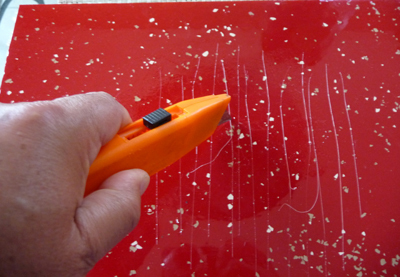
Below we've taken an epoxy floor sample with chips and scratched it with a razor knife for emphasis to demonstrate the repair process.
Step 1: The damage — scratches from a utility knife
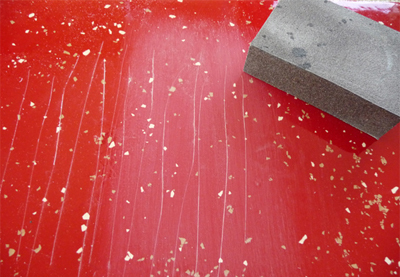
Step 2: Lightly sand with an extra-fine 3M pad and wipe clean
Step 3: Brush on new topcoat — scratches disappear completely
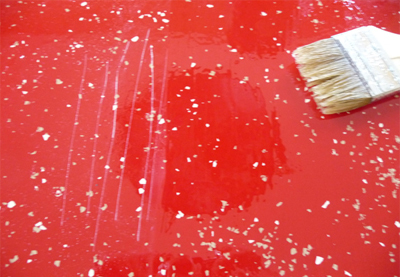
Notice the difference: The area to the left of the paint brush is fully restored. We purposely left some scratches and sanded areas uncoated so you can see the contrast. This is why you paid a little extra for an ArmorGarage epoxy floor.
Don't have leftover topcoat? Call us for a repair kit and we'll send you a small batch of the topcoat. The repair process is simple: lightly sand with an extra-fine 3M pad, wipe off the residue, and brush on the new topcoat. Done.
How Do You Clean Garage Floor Tiles & Mats?
Wash down your garage mats or garage tiles with water and some dish washing liquid. To make future cleanings even easier and add extra protection, use a good-quality household vinyl floor cleaner/wax such as Clean & Shine or Mop & Glo. For a more durable solution we recommend Hillway Direct Plus Cleaner & Maintainer — a commercial-grade product that will last you several years.
Once you've cleaned with one of these products, subsequent cleanups can be done by simply wiping down with a damp rag or mop. A sponge squeegee also works great, and for the most part a simple garden hose rinse will get the job done. No harsh chemicals or power washing should ever be needed — but power washing won't hurt the mats or tiles if you feel the need.
Why Do New Tires Stain Garage Floor Tiles & Mats?
Tire manufacturers now add an anti-degradation chemical called 6PPD, which leaches out of some tires and stains the surfaces they sit on. It protects the tire from cracking and ozone damage, but where the tire parks — on garage floor tiles, mats, and other surfaces — that leaching shows up as yellowish-brown staining under and around the contact patch. The staining has become much more common in recent years as 6PPD use has spread across tire brands.
Prevention and fix: The best prevention is keeping a good coat of wax on the surface, or Hillway Direct Plus Floor Cleaner & Maintainer for added protection. If your tiles or mats do become tire-stained, give us a call and we'll help you out.
How Do You Repair a Damaged Garage Tile or Mat?
Tile repair couldn't be easier. If you somehow manage to damage one of the tiles — which isn't easy to do — just drill a small hole in the damaged tile, pry it out with a screwdriver, and pop one of your spare tiles back in. Done.
Mat damage is extremely rare. It would require cutting something directly on the mat without protection, or dropping a sharp, heavy pointed object. If you do work with sharp blades or heavy pointed objects, please use floor protection just like you would on any other fine flooring.
If mat damage does occur: For small cuts or punctures, use 3M Seam Weld to fuse the area back together. For more serious damage, give us a call or email and we'll help you out as best we can.
Keep your floors clean and enjoy looking at them for years to come. Visit our Technical Resource Hub for selection guides, application instructions, TDS and SDS sheets. Questions? Call 866-532-3979 or email info@armorgarage.com.