Bakery Flooring Questions, Answered
What a Bakery Floor Has to Survive, and Which Epoxy Does It
We manufacture these systems and they're on the floors of retail bakeries and 24/7 production plants. Flour, sugar, fat, hot washdowns and rolling racks are the test — here's how our floors pass it.
What is the best flooring for a commercial bakery?
A seamless, non-porous epoxy system with an integral cove base — it's the only floor that gives you a sanitary surface, chemical resistance to fats and sanitizers, and the impact strength for rolling racks and dropped pans in one installation. Tile grout lines, sealed concrete and sheet vinyl each fail one of those tests.
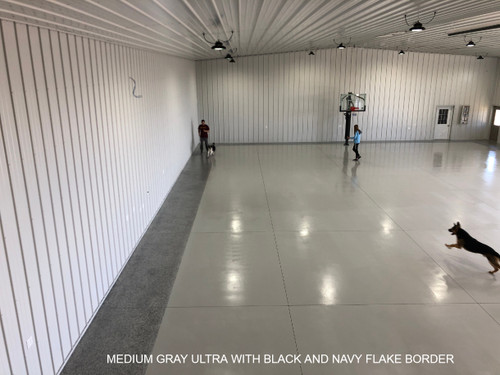
Which epoxy depends on the volume. For a retail bakery with a front counter and a back room, our two-layer Commercial System gives you a high-gloss, easy-mop floor at the lowest cost. For a medium-volume production bakery running mixers, proofers and racks all day, the three-layer Military-Industrial System adds thickness and a harder wear coat. For a 24/7 industrial bakery with forklifts and pallet jacks, the chemically hardened Heavy Tonnage System is the one that doesn't wear through — the Tile Red floor pictured on this page is one of them.
Is epoxy flooring USDA and FDA compliant for food production?
Yes. Our epoxy floor systems are USDA-approved for food prep and processing areas. A cured 100%-solids epoxy is inert, non-porous and seamless, which is exactly what inspectors are looking for: nowhere for flour dust, sugar syrup or bacteria to lodge, and a surface that sanitizes with a wash rather than a scrub.
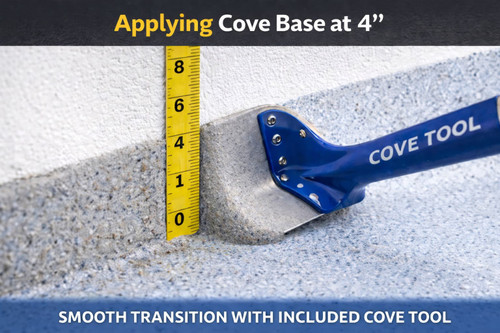
The part most bakeries miss is the floor-to-wall joint. A square corner between the floor and the wall is where washdown water pools and mold starts, and it's the first place an inspector looks. Our Cove Base Epoxy Kit builds a radiused epoxy cove up the wall so the floor becomes a sealed, waterproof tub — washdowns run to the drain instead of into the wall base, and there's no seam to harbor anything. We recommend it on every production floor.
Will epoxy hold up to sugar, fats, vegetable oil and sanitizing chemicals?
Yes. Sugar syrups, shortening, butter, vegetable and fryer oils, egg wash and the quaternary and chlorine sanitizers bakeries run every shift all wipe off a cured epoxy floor — none of them penetrate or etch it. That's the difference between a coating and a sealed slab, which absorbs fat and goes rancid in the pores.
The one exception is a floor that sees daily caustic or acid washdowns — a heavy-duty degreaser program or a CIP line that drains to the floor. For those areas use our Chemical & Acid Resistant novolac epoxy, which is built for immersion-grade exposure; it can be run in the washdown zones only while the standard system covers the rest of the plant. Tell us what's in your sanitation program and we'll specify it before you order.
Is epoxy flooring slippery when wet or greasy?
Not ours. Every ArmorGarage system ships with a micro-tubular aluminum non-slip additive that goes into the topcoat, so the floor is slip-resistant under a wet mop or a greasy spill without losing its high-gloss, easy-clean finish. For wash bays, dish areas and ramps that are wet all shift, our Textured Non-Slip Epoxy gives you an aggressive OSHA-grade grip.
The additive matters more than the broadcast. Sand or quartz broadcasts give grip but create a rough surface that traps flour and is miserable to sanitize; the aluminum additive sits in the topcoat like rebar, so the floor stays smooth enough to squeegee clean. We'll tell you where to run the standard additive and where to step up to the textured coating — usually it's the three or four wettest areas, not the whole floor.
Can epoxy handle hot water washdowns and the heat around ovens?
Yes, within the range a bakery actually produces. Our 25–30 mil Military-Industrial and Heavy Tonnage systems are rated for heat exposure up to 350°F, which covers hot-water and steam washdowns, radiant heat from deck and rack ovens and a dropped sheet pan straight out of the oven. The thin, water-based epoxies that crack under thermal shock are a different product — ours are 100%-solids and thick enough to take it.
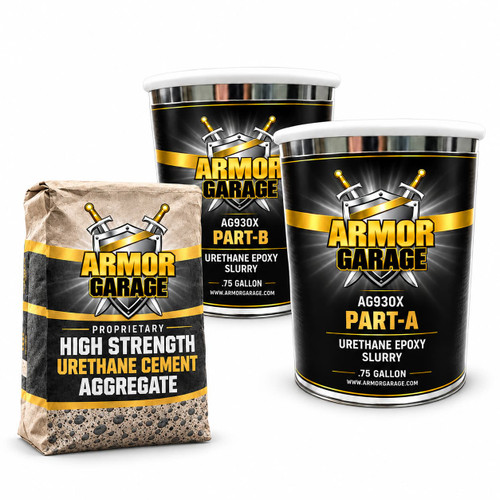
Where you genuinely need urethane cement — boiling-water washdowns, steam kettles that dump to the floor, blast freezers — we make that too: our Self-Leveling Urethane Cement is the thermal-shock floor for those zones. Most bakeries don't need it everywhere; they need it under the kettle and the oven line and a standard epoxy everywhere else. That's a specification question, and it's one we answer for free from a floor plan.
Will a bakery epoxy floor survive dropped pans, rolling racks and pallet jacks?
Yes — impact and abrasion are what separate our systems from retail epoxy. The Military-Industrial topcoat rates 4 mg on the Taber abrasion test and Heavy Tonnage 3 mg, against 25 mg and higher for the epoxies sold through hardware stores. Once a coating is past 25 mg it's no harder than semi-gloss wall paint, which is why those floors show rack-wheel tracks in a year.
Rolling racks are the real test: hard-wheel point loads, all day, on the same paths. A soft topcoat grooves; a brittle thin one chips at the edges of the groove and the chips spread. Our base coats penetrate into the slab and the urethane-fortified topcoats are hard enough that we've driven forklifts with the blades down over Heavy Tonnage and left no mark. When a topcoat does finally show wear on the rack lanes after years of service, it's a light scuff and a new topcoat, not a grind-off and start-over.
Can we install it ourselves, and how long is the bakery shut down?
Yes — our systems are turnkey packages sized to your square footage, designed for first-time users and installed by in-house maintenance staff every week. Plan on two to three days: prep and primer on day one, the build coat and topcoat at 4–8 hours apart, foot traffic the next morning and racks and carts in 48 hours. Production floors are done in sections so the ovens never stop. Using the Fast Dry Primer with the Heavy Tonnage Epoxy allows you to diamond grind, prime and epoxy in one long day.
The job is the prep, not the coating. A bakery slab is usually sealed with years of fat, so it has to be degreased until water soaks in, then diamond-ground or acid-etched, with cracks and joints filled before the primer goes down. Skip that and no coating on earth will hold. We ship the prep materials in the kit, our instructions walk you through it step by step, and our techs are on the phone and email seven days a week. If you'd rather use a crew, any flooring contractor can install our system; you still save the markup on the material.
How much does bakery epoxy flooring cost?
Material, delivered free: $1.32–$1.92 per square foot for the Commercial System, $2.00–$2.65 for the Military-Industrial System and $2.50–$2.90 for Heavy Tonnage, plus $198 for a cove base kit. Contractor-installed epoxy runs $6–$9 per square foot and often with a thinner product; urethane cement installed can run double that.
Judge it on cost per year. A bakery floor that fails in two years under washdowns and racks costs the material twice plus two shutdowns and a diamond grind; ours are rated for 10–15 years of service and recoat without starting over. Send us your square footage, your bakery type and whether you run hot or caustic washdowns, and we'll price the right system and tell you exactly what ships.



 12 Standard Colors
 Geared For Larger Projects - Sold By The SF to Match The Size Of Your Floor
 Turnkey Package To Do The Job Right