

Sealing A Driveway vs Coating It
Posted by ArmorGarage LLC on Jul 31st 2025
Shop ArmorGarage Surface Bond driveway coating
Outlasts sealers 4:1 • Many colors, not just black • Nontoxic • DIY-friendly
Sealer Wears Off. A Coating Lasts.
Off-the-shelf sealers and stains are a "kick the can down the road" fix. A true coating like ArmorGarage Surface Bond bonds, penetrates, and protects your asphalt or concrete driveway for a decade or more.
Outlasts Sealers 4:1 • 10+ Year Life • DIY, No ContractorShould you seal your driveway or coat it?
If you want to do it once, coat it. Off-the-shelf sealers and stains are cheap and water-thin — they sit mostly below the surface, wear off in a year or two, and fade to a ghost-like look, so you're back to resealing again and again. A true coating like ArmorGarage Surface Bond cures into a thick, tough layer that also penetrates and bonds to the surface, lasts 10+ years (outlasting sealers about 4:1), comes in many colors, and is nontoxic. It costs a bit more up front but far less over the life of the driveway.
Sealing vs. Coating: What's the Difference?
The words get used interchangeably, but they're very different jobs. A sealer or stain is a thin, temporary surface treatment. A coating is a thick, permanent protective layer. Here's how they stack up:
✗ Water-thin — sits mostly below the surface
✗ Wears off in roughly 1–3 years
✗ Fades to a "ghost-like" appearance
✗ "Kick the can" — the problems keep coming back
✗ Usually black only; many are toxic
✓ Thick, tough layer that bonds and penetrates
✓ Lasts 10+ years — outlasts sealers about 4:1
✓ Resists peeling, cracking, weather & tire abrasion
✓ Stays flexible; available in many colors
✓ Nontoxic, unlike most asphalt sealers
Why Does a Driveway Need More Than a Sealer?
New asphalt starts smooth and black and concrete starts clean, but UV rays, water infiltration, and vehicle fluids stain and break the surface down. Left unprotected, cracks and potholes form, shortening the life and ruining the look of the driveway. A quality coating — not a thin sealer — is what actually extends that life:
What Happens If You Don't Seal or Coat?
Coat it once and be done for a decade
Surface Bond for asphalt and concrete — many colors, nontoxic, DIY-friendly.
How Do You Coat a Driveway Yourself?
No contractor required. With the right tools and ArmorGarage Surface Bond, you can get professional results in four steps:
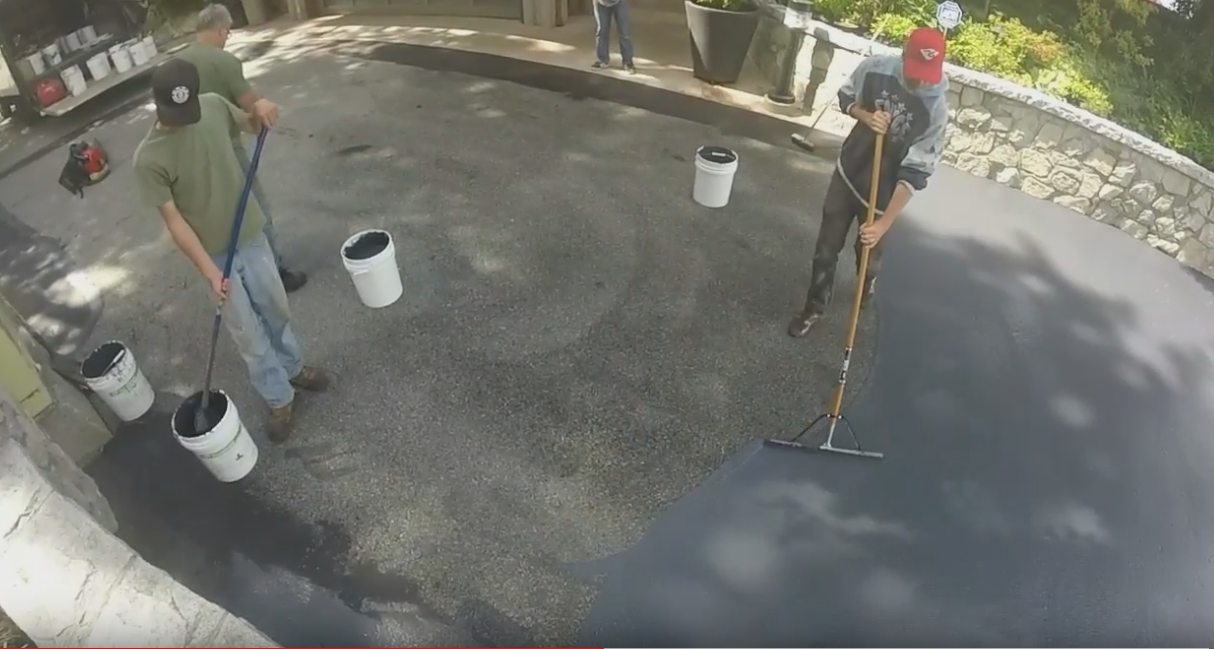
Surface Bond being squeegeed on and then back-rolled.
Prep details: Clean with TSP and a power washer; for oil stains, scrub in some Liquid Tide with muriatic acid. Fill gaps with ArmorGarage Crack & Joint Compound on concrete or ArmorGarage asphalt patch on asphalt. Getting the prep right is what makes the coating last.
Why DIY Instead of Hiring a Contractor?
Driveway Sealing vs. Coating: FAQ
What's the difference between driveway sealer and a driveway coating?
A sealer or stain is water-thin and sits mostly below the surface, so it wears off quickly and fades. A coating like ArmorGarage Surface Bond is many times thicker — it cures into a tough layer on top while penetrating to form a strong bond, giving lasting protection instead of a temporary touch-up.
How long does driveway sealer last vs. a coating?
Store-bought sealers and stains typically last only a year or two. ArmorGarage Surface Bond lasts up to 10 years or more before a single refresher coat — roughly four times the life of a sealer, which makes it far cheaper over time.
How much does it cost to coat a driveway vs. seal it?
ArmorGarage Surface Bond costs about $3.45 per square foot in material for two coats that will last 10+ years. Driveway sealers costs less per application — typically under $0.50 per square foot — but must be reapplied every 1–2 years, so over a decade you pay for the job five or more times plus the repeated labor. Also, what usually happens is that after a certain number of failed sealers, you need to do an expensive diamond grind to get back to a coatable surface. Per year of protection, a high-quality coating is the cheapest option, especially when there's no contractor cost.
Can you coat a driveway yourself?
Yes. Clean the surface (TSP and a power washer), repair cracks and holes, apply two even coats by roller, squeegee, or sprayer, then allow it to cure. ArmorGarage kits are made for first-time users, so no contractor or special equipment is needed.
Does driveway coating come in colors other than black?
Yes. Unlike most sealers, which are black only, ArmorGarage Surface Bond is available in many colors — so you can finish a driveway, walkway, or public area to match the look you want. It's also nontoxic.
Can you coat a driveway that was previously sealed?
It needs a clean, sound surface to bond to. Any old sealer that's peeling or failing has to be cleaned off first, along with dirt and oil. Once the surface is properly prepped, Surface Bond can be applied for a long-lasting result.
Is coating cheaper than hiring a contractor?
Yes — using a complete DIY kit can save thousands compared to professional services while giving you a higher-quality, longer-lasting finish. Add in the years between recoats, and a coating costs far less than the repeated re-sealing cycle.
Stop re-sealing. Coat it once.
Shop Surface Bond and our repair products, or get expert advice on your driveway project.