


Solid PVC vs. Hollow-Core Garage Floor Tiles
A practical comparison of materials, connector design, noise, installation and load performance.
Tested and selected by the U.S. Army Marksmanship UnitSolid PVC and hollow-core polypropylene garage tiles may look similar from above, but their construction is fundamentally different. Solid PVC tiles contain material throughout their full thickness, while hollow-core tiles use a thin top surface supported by ribs underneath.
That difference affects weight, sound, flexibility, connector strength and performance over uneven concrete. This guide explains what to compare before choosing an interlocking garage floor.
Solid Core and Hollow Core: What Is the Difference?
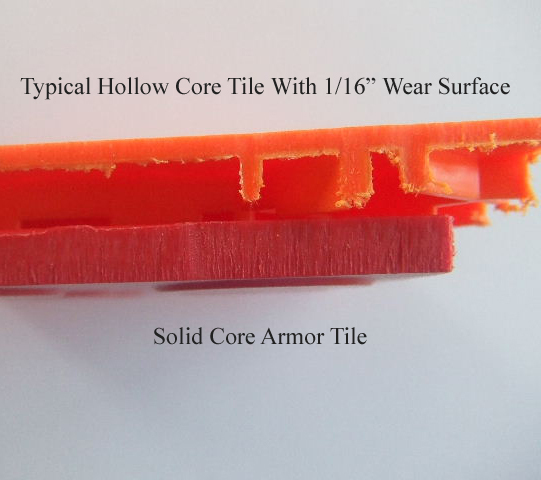
Hollow-core polypropylene tile above and solid PVC ArmorGarage tile below.
Hollow-Core Polypropylene
- Thin wear surface supported by vertical ribs
- Lightweight construction, under one pound per tile
- Widely spaced peg-and-loop connectors around the perimeter are much less secure, tiles can spread apart
- Rigid material creates pressure points over high and low spots leading to fatigue failures from flexing up & down.
- Hollow structure can produce clicking or rattling sounds
ArmorGarage Solid PVC
- Solid PVC throughout the full 3/16- to 5/16-inch thickness of each tile
- Tiles weigh approximately 3.5 to 5.5 pounds each
- Continuous interlocking t-joints or dove-tails around the perimeter form a tight secure joint
- Flexible construction follows minor slab contours, no high & low failure points
- Greater mass eliminates clicking and tile rattle noises
Tested and Selected by the U.S. Army Marksmanship Unit
The U.S. Army Marksmanship Unit at Fort Benning evaluated interlocking floor tiles from multiple vendors for exposure to weapons-cleaning solvents, vehicle and foot traffic, and routine impacts. The procurement report concluded that ArmorGarage Armor Tile was the product most suitable for the unit's requirements.
The tested product was selected for its overall performance—not simply its initial purchase price.
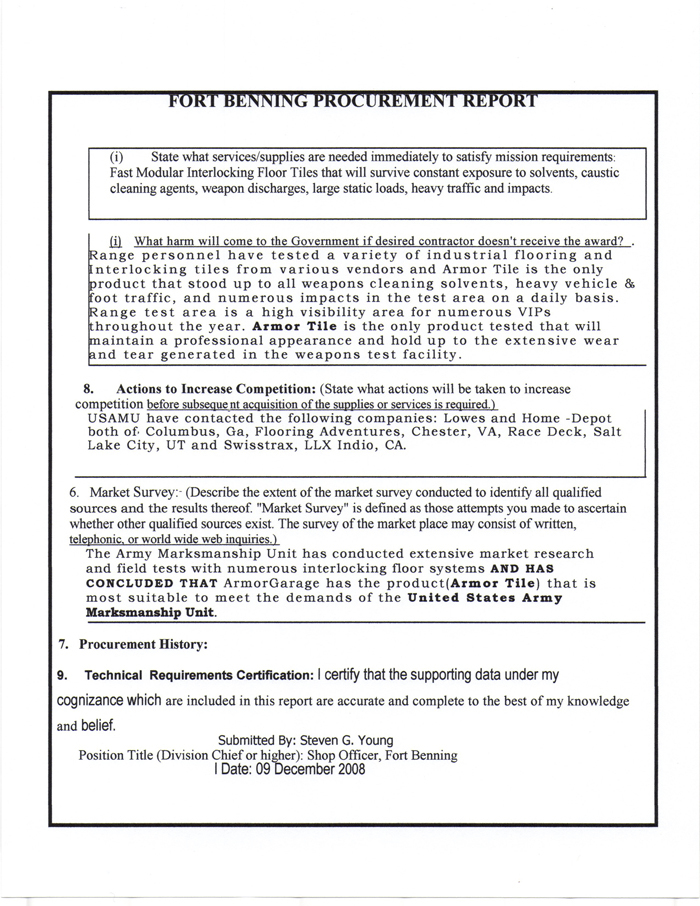
U.S. Army Marksmanship Unit procurement report. Select the image to enlarge it.
Shop the Tile Evaluated by the U.S. Army
Compare solid PVC T-joint, hidden-seam, coin, slate and diamond-pattern garage tiles.
Shop Solid PVC Garage Floor Tiles →How Construction Affects Everyday Performance
Noise and Tile Rattle
Lightweight hollow tiles can create a clicking sound as vehicles and foot traffic move across the floor. Movement at peg-and-loop connections as the pegs pop in and out of the loops create a rattling sound, particularly when the concrete has minor high and low spots (which all garage floors do). Solid PVC has substantially more mass, and its continuous joints create a quieter, more stable surface.
Uneven Concrete
No concrete slab is perfectly flat. Rigid hollow-core tiles bridge over minor slab high & low variations, creating point loads at those locations which lead to sress failures. Solid PVC tiles have enough flexibility to follow ordinary floor contours and eliminate point load stresses. Significant protrusions should still be removed before installation.
Dirt, Water and Under-Tile Drainage
Interlocking floors are not waterproof barriers, and liquids can eventually reach the slab through seams. Close-fitting continuous joints help limit routine debris. Perforated tiles allow all debris to get under the floor.
Connectors and Floor Movement
Continuous T-joint and dovetail connections distribute the connection around the entire tile perimeter. This provides more engagement than widely spaced isolated peg-and-loop tabs and prevents shifting and widening seams under normal vehicle and rolling traffic. Compare all our solid PVC garage floor tiles before you buy.
Understanding Garage Floor Tile Load Ratings
Rollover capacity and static-load capacity measure different conditions. Rollover capacity describes a moving load passing across the floor. Static capacity describes a load that remains in one place such as parked vehicles, equipment and machinery. Hollow core tiles are prone to forming indents from heavy static loads or repetitive traffic.
Important: Ratings vary by ArmorGarage tile style. Confirm the specifications for the product being considered. Cut around permanently mounted lifts and high-capacity industrial machinery unless ArmorGarage approves a different installation method for the specific application.

Heavy-duty solid PVC tiles installed in a facility supporting fire apparatus.
Installation and Ownership Considerations
Floor Preparation
Sweep the concrete clean and remove loose debris or raised concrete that could interfere with the floor. Grinding, etching and coating removal are generally unnecessary for a standard floating-tile installation.
Installation Method
Start at the front center of the garage and work toward the back and side walls. Connect the tiles with a rubber mallet and cut perimeter pieces with a power saw fitted with a sharp wood-cutting blade. Adhesive is typically reserved for ramp edges and applications involving aggressive forklift turning or sudden starts and stops.
Expansion Space
All flooring materials respond to temperature changes, allow for expansion and contraction. Follow the product's installation instructions for the required perimeter clearance, especially in unconditioned garages exposed to seasonal temperature swings.
Cleaning and Tire Staining
Clean the tiles with mild soap and water. Modern tire compounds can transfer antioxidants and discolor many flooring surfaces, including all garage tiles. We recommend coating your new tiles with Hillway Direct Cleaner & Maintainer Sealer. It's a durable coating that lasts for several years and will keep your tiles stain free.
Frequently Asked Questions
Are solid PVC garage floor tiles quieter than hollow-core tiles?
Generally, yes. Solid PVC contains more material and does not have a hollow cavity that amplifies footsteps and vehicle movement. Continuous perimeter joints also eliminate connector movement and tile rattle common with hollow peg & loop tiles.
Can garage floor tiles be installed over cracked or uneven concrete?
Solid PVC tiles can bridge ordinary cracks and follow minor slab contours. Remove loose material and significant protrusions first. Structural movement and or severe/abrupt elevation changes should be evaluated before installation.
Do interlocking garage tiles need to be glued down?
Not for the majority of installations. The tiles normally form a floating floor that will weigh several hudred pounds as opposed to much lighter hollow tiles. Adhesive may be used beneath ramp edging or for commercial areas with aggressive forklift turning and braking.
How long does a typical garage installation take?
A typical two- to 2.5-car garage can often be completed in approximately four to five hours once the layout is established. Cutting around walls, columns or built-in equipment may add time.
Can I use a jack, jack stands or a vehicle lift on the tiles?
Yes, the tiles can easily handle all those loads. For heavy commercial lifts we recommend cutting the tiles around the lift supports.
Can individual garage tiles be replaced?
Yes. An individual tile can be released and replaced without removing the entire floor. The complete floor can also be disassembled and moved to another location.
What is the difference between garage floor tiles and rollout mats?
Garage tiles are thicker interlocking panels that allow custom colors and patterns and make individual replacement possible. Rollout mats are thinner polyvinyl sheets designed for the fastest possible installation. Both options avoid coating cure time.
Are ArmorGarage garage floor tiles guaranteed for life?
ArmorGarage solid PVC garage floor tiles carry a lifetime guarantee.
Choose the Right Solid PVC Tile for Your Floor
Compare thicknesses, patterns, colors and load requirements, or contact us for help planning your layout.