

-
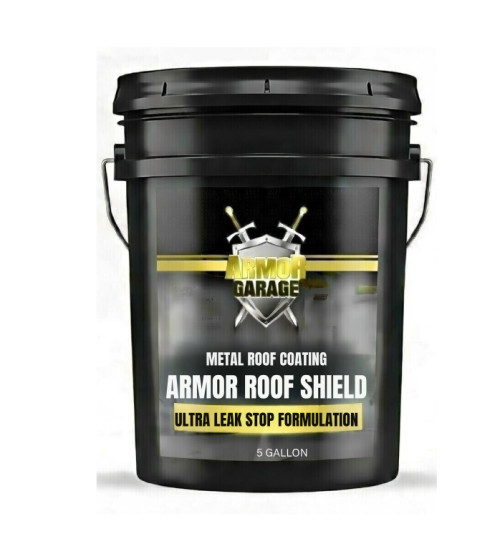
Metal Roof Coating
Best metal roof coating, DIY friendly saves thousands on install and replacement costs Used On All Roofs At Beale Air Force Base
 12 Year Guarantee - Routinely Lasts 15-20
 100% Leak Stopping Formulation
-
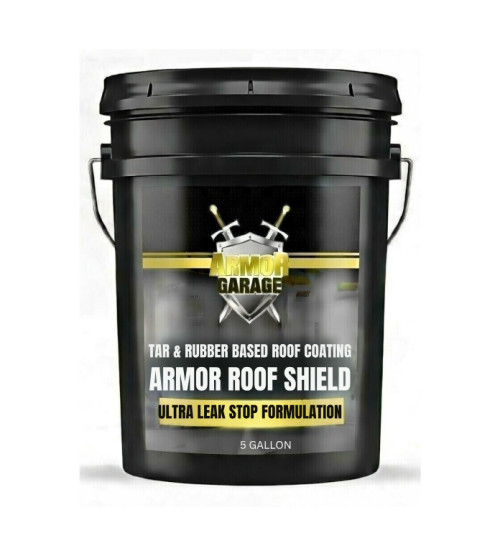
Roof Coating For Tar & Rubber Roofs
Epoxy based roof coating with superior finish & durability. No prior experience required
15 Year Guarantee - Routinely Lasts 20 Years
100% Leak Stopping Formulation
Industrial Grade Not Water Based
-

Ponding Water Flat Roof Coating - AGPW5G
Save thousands by eliminating costly repairs of low spots. Impervious to any amount of water
Ponding Water Proof
Eliminates Roof Damage From Standing Water. Performs Where Other Coatings Fail!
Easily Applied In One Coat!
-

Armor Shingle Roof Coating
Best Shingle Coating, save thousands over replacement. Performs as advertised.
Easy Roller or Garden Hand Pump Sprayer - 1 Day Application
Prevents Leaks - Restores Shingle Colors
Extends Shingle Life 5-7 Years.
-

Coating For Foam Roofs
Best Foam Roof Protection. Heat reflective. Preserves foam integrity
Heat Reflective
DIY Friendly
Cost Effective - Save 80%
-

Roof Repair Mastic
Complete your roof coating project like a pro by flashing everything properly
Seals All Seams & Roof Penetrations
Won't Crack or Alligatore Like Retail Grade Products
Easy Application. No Prior Experience Needed
-

All Purpose Liquid Waterproof Membrane Coating
Applied in two coats this flexible membrane waterproofs any surface
Multiple Colors
175-200 SF/Gal
Long Lasting & Easy To Apply
Professional Roof Restoration Systems
Roof Coatings for Every Type of Roof
ArmorGarage roof coatings are selected according to the existing roof material and the conditions the finished system must withstand. Product options are available for metal, asphalt, tar, rubber, foam, shingles and flat roofs with ponding-water areas.
Any roof coating can stop a leak when first applied but most coatings fail quickly and the leaks keep coming back. ArmorGarage roof coatings are made to outlast the competition with leak-proof, heat reflective and hail resistant surfaces without the expense and disruption of never ending patching or roof replacement.
Proven commercial use: ArmorGarage roof coating systems have been used on large commercial and military projects, including metal-roof applications at Beale Air Force Base.
Metal Roof Coating
Metal Roof Coating — Stops Leaks, Guaranteed 12 Years
We manufacture a rubber-fortified epoxy-acrylic metal roof coating that does what silicone and water-based coatings can't: it stretches 500% with a metal roof's expansion and contraction, snaps back with 99.99% memory recovery, and keeps doing it for 15–20 years. Seams, screw heads and penetrations get sealed with our roof mastic first, then two coats encapsulate the entire roof.
It rolls or sprays on with no prior experience, costs about $1.20–$1.70 a square foot in material against $8–$14 for a new metal roof, reflects 90% of the sun's heat so interiors run 7–10°F cooler, and when it's finally time, one new coat reactivates the old and renews the guarantee — something silicone can never do.
When a 50-year-warranty silicone failed in under five years, Beale Air Force Base made our Metal Roof Coating the standard for the entire base. A customer's 100-year-old historic metal roof coated with it came through a hail storm that destroyed 80% of the roofs in town with cosmetic damage only.
Metal Roof Coating: Before and After
This deteriorated and leaking metal roof was restored using the appropriate repairs, primer and protective roof coating system. Select either image to enlarge it.
Roof Coating Questions, Answered
Which Roof Coating Is Best, What Does It Cost, and How Long Does It Last?
We manufacture these coatings, and they've been on commercial, military and residential roofs for over 20 years. Every rep on our support line has put them on a roof, so these are our answers — not a reseller's.
What type of roof coating is best?
It depends on the roof — but the three types most guides compare (silicone, acrylic and polyurethane) each give up something, and there is a fourth type that doesn't: an epoxy-fortified butyl rubber copolymer, which is what ArmorGarage Roof Shield is.
Silicone resists standing water but is soft, attracts dirt and can't be recoated. Standard off-the-shelf Acrylics are cheap and reflective but water-based, so it loses thickness as it cures and chalks away over time, we modify ours with higher solids to avoid those problems providing 20 year lifespans.
Polyurethane is hard but needs a UV-stable topcoat. ArmorGarage Tar & Rubber Roof Shield is high-solids butyl rubber based epoxy (not thinned with water), cures to a thick membrane with 500% elongation and 99.999% memory recovery, carries the lowest permeability rating we've tested against, has the highest Shore-D hardness in its class for foot traffic and hail, and reactivates so it can be recoated 15–20 years later.
By roof type: flat tar, modified-bitumen and rubber/EPDM roofs → Tar & Rubber Roof Coating. Metal roofs → Metal Roof Coating, a high-solids modified acrylic engineered for metal's expansion and contraction, in service on roofs for 20 years and used on all roofs at Beale Air Force Base. Low spots that hold water → Ponding Water Roof Coating. Asphalt shingles → Armor Shingle Roof Coating. Spray foam → Foam Roof Coating.
Which is better, silicone or elastomeric roof coating?
Neither is the right answer for most roofs. Silicone wins on standing water and loses on hardness, dirt pickup and recoatability; elastomeric acrylic wins on price and loses about a mil of thickness a year to chalking. Beale Air Force Base ran silicone on its metal roofs and switched to ArmorGarage Metal Roof Coating for its durability and ease of application.
The reason acrylic elastomerics wear away is that they are water-based — up to half of what's in the pail evaporates during cure, leaving a thin film. ArmorGarage Metal Roof Coating is a modified high solids industrial grade acrylic (not water based), it cures to an extra thick waterproof membrane, is guaranteed for 12 years, routinely lasts 15–20, and reactivates when recoated so the new coat bonds to the old — something silicone can't do. For tar and rubber roofs the answer isn't silicone or off-the-shelf acrylics at all; it's the butyl rubber epoxy copolymer above.
What are the downsides of using silicone roof coating?
Silicone is very soft. It tears, scuffs and punctures under foot traffic and is damaged by severe weather — hail, wind-driven debris, ice — attracts dirt that kills its reflectivity, is dangerously slippery when wet, and once it's on the roof nothing else will stick to it, so recoating means more silicone or a full strip.
Read the warranty limitations before you buy: silicone warranties typically exclude physical damage and foot traffic, which means the roof you just coated is one you're not supposed to walk on. For a flat roof that holds HVAC units, vents or anything a tech has to reach, that's a real limitation.
Those are the exact problems our roof coatings were built to eliminate. Roof Shield's epoxy polymers give it the highest Shore-D hardness in its class — it takes maintenance foot traffic and golf-ball hail (one customer's 100-year-old metal roof came through a storm that destroyed 80% of the roofs around it with cosmetic damage only) — and every ArmorGarage roof coating is recoatable. For flat roofs that need a walkable area to service equipment or use as a deck we offer a version with rubber granules. For the one job silicone is usually chosen for, standing water, we make a dedicated ponding water coating that is also recoatable.
What is the best waterproofing roof coating?
The best waterproofing coating is the one with the lowest permeability rating — the tightest chemical structure with the smallest pores — that chemically cures to a single extra thick flexible monolithic finish. ArmorGarage Roof Shield has the lowest permeability rating of any roof coating we've tested against and 99.99% memory retention meaning it won't stay stretched out after years of expansion and contraction like lower quality coatings will.
Most roof leaks aren't holes you can see. The pores of an aged roof membrane, and cheap low quality coatings have larger pores to start out with and stretch open further over time from temperature expansion and contraction until water passes straight through the stretched out pores and shows up inside the building somewhere else. It's why finding leaks can be a frustrating and costly experience. The best coatings have molecular structures with low vapor transmission ratings and the smallest pores to begin with that don't stretch open from thermal expansion & contraction. ArmorGarage Roof Shield combines a copolymer butyl rubber base (butyl outperforms EPDM, liquid or sheet) with epoxy polymers for hardness, and passed 9,000 hours of ASTM accelerated severe-weather testing. Silicone is the usual pick for standing water; for those areas we recommend our purpose-built ponding water coating instead.
Are roof coatings a good idea?
Yes — if the roof is structurally sound and dry, a coating restores it for a fraction of the cost of tear-off and replacement, adds 15–20 years of service, and cuts interior heat. They are not a fix for rotted decking, saturated insulation or structural damage.
Two cautions you'll read elsewhere deserve a closer look. "Coatings peel if the prep is bad" is true of every coating — clean, let the roof dry out, repair the seams and flashings with our Roof Repair Mastic, then coat. "Don't coat asphalt shingles" is advice about elastomeric coatings, which seal the shingle and trap moisture underneath; our Armor Shingle Roof Coating is breathable, locks down granules and extends shingle life 7–10 years without sealing the roof assembly. A large leaking warehouse restored with our coating went from constant leaks to none and dropped its interior temperature about 7°F.
How many years does roof coating last?
Lifespan depends greatly on the quality of the product! Industry average figures run 5–10 years for acrylic, 10–15 for polyurethane and silicone. ArmorGarage Tar & Rubber Roof Coating is guaranteed 15 years and routinely lasts 20; Metal Roof Coating is guaranteed 12 years and routinely lasts 15–20; both recoat for another 15–20.
What decides it is cured-film thickness, UV and weather resistance, and whether the membrane keeps recovering to its original shape after the roof moves, ArmorGarage roof coatings have 99% memory retention. A water-based coating that goes on at 20 mils and cures to 8 has spent half its life before the first winter. Ours high-solids goes on thick and stays thick, retains 99.999% of its shape after stretching, and was tested to 9,000 hours of ASTM severe weather. Shingle and foam coatings have shorter cycles (7–10 years on shingles) because the substrate itself ages.
How much does it cost to do a roof coating?
Contractor-applied roof coating runs about $1.50–$5.00 per square foot for labor and materials. Doing it yourself with ArmorGarage, materials come to roughly $1.60–$1.95 per square foot for metal, tar and rubber roofs (two coats, free shipping), $2.35 per square foot for ponding-water areas for small roofs with larger roofs costing about 25% less, and about $0.60 per square foot for shingles.
If our material numbers look higher than the $0.15–$0.50-per-foot pails at the hardware store, that's the point: the cheap end of the range is water that evaporates off the roof, leaving a film that needs redoing in a couple of years. Our per-foot cost buys a full-thickness membrane guaranteed for 12–15 years. Every ArmorGarage roof coating can be rolled or sprayed by the owner — no crew, no special equipment — and we'll estimate the pails you need and any other materials from photos and square footage. Roofs over 5,000 sq ft qualify for volume pricing.
How much does a 5 gallon bucket of roof coating cover?
It depends on the coating and the number of coats. ArmorGarage Tar & Rubber and Metal Roof Coatings go down at 100 sq ft per gallon — a 5-gallon pail covers 500 sq ft per coat, or 250 sq ft finished at the required two coats. Ponding Water Coating is applied at 50 sq ft per gallon in one coat, so a pail covers 250 sq ft. Armor Shingle Roof Coating covers 1,250 sq ft per pail per coat, or about 625 sq ft finished at two coats.
Those rates are what it takes to build a membrane thick enough to last, which is why they're lower than the 200–400 sq ft per gallon printed on water-based pails — that coverage is thin on purpose. Order for the finished square footage plus a small buffer for rough or porous surfaces, and add Roof Repair Mastic for seams, flashings and screw heads.
What are people saying about roof coating for shingles?
The common warning is that coating shingles traps moisture and voids the shingle warranty. That warning is about elastomeric and silicone coatings, which seal the shingle surface. A breathable shingle coating does the opposite: it locks down loose granules, seals weathered spots and refreshes color while letting the roof assembly breathe.
Armor Shingle Roof Coating has been one of our best-selling products for years for exactly that reason — it extends a serviceable shingle roof 7–10 years, goes on with a roller or a garden pump sprayer in a day, and customers report it performs as advertised. It is for roofs that are aging but sound; it won't rescue shingles that are curling, cracked through or have lost the majority of their granules. The best policy is to protect your shingles before they get to that point.
Can a roof coating stop leaks?
Yes, absolutely, our coatings are made to stop the leaks you can't find and fix or those leaks you fix but always come back. Repair failed seams, loose material and screwheads, damaged flashings and open penetrations with Roof Repair Mastic, then encapsulate the entire roof — once properly prepped and coated, it's impossible for water to penetrate an ArmorGarage roof coating.
Chasing individual leaks is usually futile: water enters in one place, travels, and appears somewhere else, so you patch, it comes back, and eventually the roof is a pile of incompatible products. Coating the whole roof solves it once. In the long run it is far cheaper and less stressful than the patch cycle or the constant recoating with cheap products.
Armor Roof Shield Performance
How Is Armor Roof Shield Tested for Extreme Weather?
Armor Roof Shield combines ArmorGarage epoxy technology with a copolymer butyl-rubber base. Its performance characteristics are intended to help the cured membrane remain flexible, recover after roof movement and resist prolonged exposure to moisture and ultraviolet light.
- 500% elongation: allows the cured coating to stretch as the roof moves.
- 99.999% memory recovery: helps the membrane return to its original shape after stretching.
- Low vapor transmission: prevents moisture movement through the cured coating.
- UV and hardness performance: supports resistance to sunlight, weathering and surface wear.
- 9,000-hour ASTM weather testing: evaluates prolonged accelerated-weather exposure.
Performance specifications vary by product. Review the applicable product page and technical data sheet before selecting or talk to one of our experts for guidance.
The real cost of a temporary repair: Compare the initial price with expected years of service, repeated labor, business disruption, interior damage and eventual roof replacement. The correct coating system is intended to solve the roof problem rather than restart the repair cycle.
Commercial Flat Roof Protection
Roof Coatings for Flat, Tar and Rubber Roofs
ArmorGarage Tar and Rubber Roof Coating is designed for compatible asphalt, tar, modified-bitumen and rubber roof applications. The coating is applied as a continuous protective membrane after the roof has been cleaned, dried and repaired where required.
Coverage, number of coats and expected service life depend on the specific product and roof conditions. Large roofs can be rolled or sprayed, and project-specific volume pricing is available.
Documented project result: A large leaking warehouse roof was restored with an ArmorGarage coating system, resolving the water problem and reducing measured interior temperature by approximately 7°F.
Asphalt Shingle Roof Protection
Asphalt Shingle Roof Coating
ArmorGarage asphalt shingle roof coating is formulated to protect aging shingles while allowing the roof assembly to breathe. It can help secure loose granules, seal small weathered areas, improve appearance and delay replacement when the existing roof remains structurally serviceable.
- Helps lock down granules before continued loss exposes the shingle surface.
- Seals and protects weathered shingles from additional water penetration.
- Refreshes faded color for a cleaner, more uniform appearance.
- Extends useful roof life 7-10 years when applied to an appropriate roof in serviceable condition.
- Roller or pump-sprayer application allows many property owners to complete the project themselves in a single day.
- See the Shingle Roof Coating product page for testimonials.
Specialty Flat Roof System
Ponding Water Roof Coating
Flat roofs frequently develop low areas where water remains for days after a storm. Standing water can accelerate deterioration of asphalt-based, built-up and other compatible roof systems while leaving silt and organic material behind as it evaporates.
Areas that hold water require a product specifically intended for ponding conditions. Standard roof coatings cannot survive under standing water, not even ours. The surface must be cleaned down to sound roofing material, treated for mold or organic growth where necessary and allowed to dry before application.
Purpose-built for standing water: ArmorGarage ponding-water coating is designed for compatible low areas, is recoatable and creates a durable surface that can tolerate maintenance foot traffic after curing.
What Our Customers Are Saying
★★★★★
5.0 OVERALL
“Good explanation of products and how they should be applied. Website easy to navigate. You get what you pay for!”
“Best products for flat roof with ponding issues.”
Talk to a Roof Coating Expert
Send pictures or video of your roof and tell us the roof type, approximate square footage, current condition and known leak or ponding areas. We will help you choose the correct product and estimate the material required.
DO YOUR ROOF PROJECT RIGHT THE FIRST TIME WITH ARMORGARAGE!
Call 866-532-3979
info@armorgarage.com