

Do People Regret Epoxy Floors? Why They Fail & How to Avoid It
Posted by ArmorGarage LLC on Aug 21st 2025
Most epoxy floor regret comes down to four root causes: thin retail kits, the wrong product choice, poor surface prep, and a weak or missing topcoat. Epoxy as a category isn't the problem — a weak system applied to an unprepared surface is. A properly built, multi-layer system with the right topcoat handles daily vehicles, hot tires, rolling tool chests, jack stands, and workshop abuse for 10 to 15+ years, and can be refreshed by recoating the top layer instead of grinding the whole floor.
You've probably seen posts like "Anyone Regret Their Epoxy Floor?" and the comments can be brutal — peeling under tires, dull spots, staining, and "it won't survive jacks or tool chests." The good news: those complaints almost always trace back to the same avoidable mistakes. This guide breaks down why floors fail and exactly how to get one that lasts.
If you want to see what long-term results look like, visit our Case Studies page for real-world examples of floors lasting 15-17+ years.
Jump To A Section
FAQ: Epoxy Floor Regret Questions
Do people regret getting epoxy floors?
Some do — but almost always when they used a thin retail kit, chose the wrong product, skipped proper surface prep, or had a weak topcoat. The regret is about the system, not epoxy as a category. A properly built multi-layer system with the right topcoat lasts 10 to 15+ years and handles vehicles, hot tires, and workshop abuse without the problems that drive the complaints.
Why do epoxy floors fail?
Epoxy floors fail for four main reasons: thin retail kits not built for real use, the wrong product for the traffic load, insufficient surface prep so the coating can't bond, and a weak or missing topcoat that lets the base coat wear through. Poor prep is the single biggest cause — if concrete isn't cleaned and profiled, the coating can't anchor and peeling follows.
What causes epoxy floors to peel?
Peeling and hot-tire lift are caused by poor surface profiling, contamination on the concrete, or thin kits not built to handle tire heat. Cheap thin coatings literally reliquify under hot tires and lift off the concrete. A high quality product combined with correct cleaning and profiling of the slab before coating is what prevents it.
Why does my epoxy floor have dull or bare spots?
Dulling, swirl marks, and bare spots usually mean the coating is still bonded but the topcoat isn't abrasion-rated for the job, so the surface wears through. People assume the floor "wore out," but it's really the lack of a quality topcoat letting the softer base coat be worn away. The fix is a topcoat with a low abrasion loss rating.
Can epoxy floors handle jacks and tool chests?
Yes — but only with the right build plus a topcoat designed for abrasion and point-load impacts, not just any clear coat. Jacks, jack stands, and rolling tool chests create concentrated point loads. A military-grade topcoat with a 4 mg abrasion loss rating handles this; a thin retail clear coat does not.
What abrasion rating topcoat do I need?
For standard garage use with daily cars and light trucks, choose a topcoat with an abrasion loss rating no higher than 20 mg. For workshops or heavy use — jacks, rolling tool chests, tractors, trailers, oversized trucks, or harsh winter salts — choose a military-grade topcoat with an industry-best abrasion loss rating of only 4 mg.
How long do quality epoxy floors last?
A properly built multi-layer epoxy system with the right topcoat is designed to deliver 10 to 15+ years of performance. ArmorGarage has documented installations lasting 15 to 17+ years. Even better, the floor can be refreshed years later by recoating just the top layer, instead of grinding the entire floor and starting over.
Are epoxy garage floors worth it?
Yes, when done right. The regret stories come from cutting corners on product, prep, or topcoat. Choose a real multi-layer system, prep the slab correctly, match the topcoat to your traffic, and allow proper cure time — and you get a floor that looks new for 10 to 15+ years and is recoatable rather than replaceable. That's a strong long-term value.
Why People Have Buyer's Remorse
In almost every "regret" story, the problem is not epoxy as a category—it's a weak system applied to a surface that wasn't ready. Here are the top failure patterns we see:
|
Peeling / Hot-Tire Lift
Caused by poor profiling, contamination, or thin kits not built for tire heat. The coating literally lifts off the concrete.
|
Dulling / Swirl Marks
The coating stays bonded, but the surface wears because the topcoat isn't abrasion-rated for the job. Bald and bare spots are common.
|
|
Staining & Discoloration
Low-grade coatings absorb fluids or break down under road salts, vehicle fluids, and cleaning products.
|
"Can't Handle Jacks/Tool Chests"
Point loads require the right build plus a topcoat designed for abrasion and impacts—not just any clear coat.
|
Rule #1: Start With the Right System
If your goal is a "do it once" garage floor, avoid choosing a kit based on price alone. Many off-the-shelf kits are thin, lower-performance coatings that can look great briefly, then wear fast in real use.
ArmorGarage systems are engineered as complete packages. When paired with the correct topcoat option, they're designed to deliver 10-15+ year performance and can be refreshed years later by recoating the top layer—instead of grinding the entire floor.
Our recommended systems:
- Armor Chip - Color flake system for 70-75% coverage, ideal for most garages
- Armor Granite - Heavy flake system for 90-95% coverage, maximum durability
Browse all our professional garage floor coating systems.
Browse all our epoxy flooring & specialty coatings
Rule #2: Prep Is the Make-or-Break Step
The #1 reason floors fail is insufficient surface prep. Concrete must be cleaned and properly profiled so the coating can chemically bond into the surface.
The goal is an open, evenly textured surface (etched or ground) so the coating can lock into the concrete pores. For detailed step-by-step prep instructions, see: How To Prep & Coat Your Floor The Right Way.
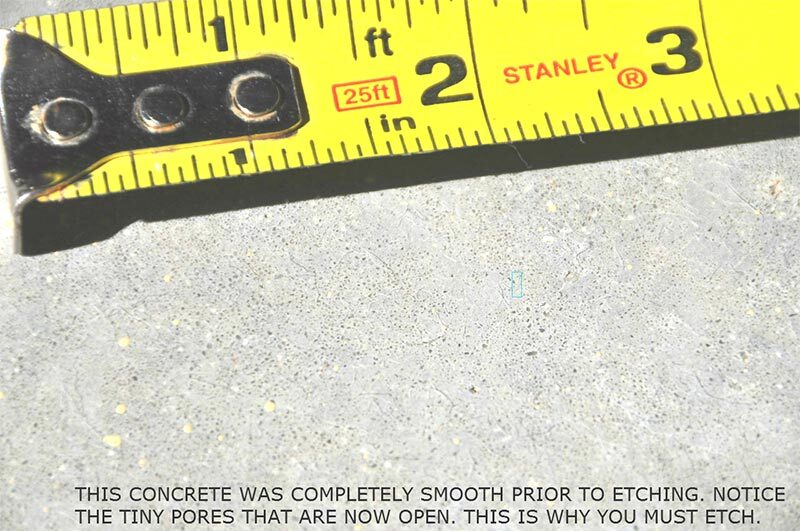
✓ CORRECT: Open pores, proper profile
|
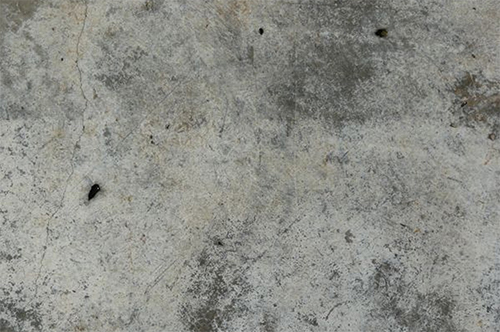
✗ WRONG: Sealed/smooth surface = failure
|
CRITICAL: If the floor is not properly cleaned and profiled, the coating can't anchor correctly—and peeling, bubbles, and delamination become likely. Don't skip this step!
Rule #3: The Topcoat Determines How Long It Stays Looking New
Many people assume the coating "wears out" because they see dull/bare spots or scratches. In reality, the floor is often still bonded—it's the lack of or low quality topcoat that is allowing the softer base coat to be worn through. That's why the topcoat matters.
Topcoat selection guide:
- Standard garage use: Heavy-duty topcoat is typically sufficient for daily cars and light trucks. Choose a topcoat with no higher an abrasion loss rating of 20 mg.
- Workshops / heavy use: For jacks, jack stands, rolling tool chests, tractors, trailers, oversized trucks, or harsh winter salts, choose a topcoat option such as our military-grade topcoat that has an industry-best abrasion loss rating of only 4 mg.
If you weld in your garage: Use a welding mat. Coatings (like most finished floors) aren't designed to take direct welding slag without protection—and you probably won't want to risk scarring your floor once you see how beautiful it is when you're done.
How to Avoid Buyer's Remorse (Quick Checklist)
- ✓ Choose a real high-quality system, not a thin retail kit that will fail in 1-2 years
- ✓ Prep the floor correctly (clean, profile, repair where needed)—this is the #1 success factor
- ✓ Pick the right topcoat for your traffic load, abrasion, and chemical exposure
- ✓ Allow proper cure time before use (typically 3-7 days depending on product)
- ✓ Learn all the epoxy myths that lead to bad buying decisions.
Need help choosing? See our Interactive Floor Coating Selector Tool or contact us at 866-532-3979 or sales@armorgarage.com.
Ready to Do It Right the First Time?
Browse our complete line of professional garage floor coatings—engineered for 10-15+ year durability with proven customer results.